AI patient matching: how it works for patients and clinics

AI patient matching means using algorithms to pair patients with the right practitioner, not to screen patients for clinical trials. It analyses symptoms, preferences, funding type and referral notes to recommend a clinician who actually fits, then routes the referral so the clinic can confirm the booking. The outcome is straightforward: faster access to the right person, less phone tag, and measurably less admin for the clinic on the other end.
The evidence for the admin side is already documented. An Australian allied-health study found that AI scribes and documentation automation delivered an average productivity increase of about 5.8% by the three-month mark. Meddle applies the same principle to referral matching: it matches by discipline, location and the capacity each clinician has shared, then routes the referral, and the clinic confirms the booking.
What this changes in practice:
-
Patients get matched to a practitioner suited to their specific presentation, not just the nearest available slot.
-
Clinics see fewer misdirected referrals and less time spent manually triaging enquiries.
-
Referrals reach a clinician who has shared capacity, and the clinic confirms the booking, cutting the back-and-forth of phone and email scheduling, as explained in this blog on automation for patient bookings.
Key Takeaways
AI patient matching works when it combines accurate intake data, a clear connection to your practice software and clear human escalation rules, not automation for its own sake.
| Point | Details |
|---|---|
| Definition matters | AI patient matching pairs patients with the right practitioner, not clinical trials. |
| Integration is non-negotiable | Check how any tool connects to your existing practice software before you commit, to avoid double entry and stale data. |
| Measure before you scale | Track referral-to-booked conversion, admin hours saved and no-show rate from the first pilot week. |
| Keep humans on triage | Clinical judgement and complex referrals stay with qualified staff, with automation flagging escalations. |
| Meddle applies this model | Meddle matches by discipline, location and the capacity clinicians have shared, routes the referral, and works alongside your practice software. |
Table of Contents
How does AI patient matching actually work?
The matching engine starts with data, not guesswork. When a patient fills out an intake form or a referral arrives from a GP, the system pulls together several inputs before it suggests a clinician.
-
Intake and symptom data — what the patient reports, in their own words and through structured questions.
-
Funding type — Medicare, private health, NDIS or workers’ compensation, which narrows the pool of eligible practitioners.
-
Patient preferences — language, gender preference, location, and appointment format (telehealth or in-person).
-
Referral metadata — the referring clinician’s notes, urgency flags and any specific discipline requested.
-
Shared capacity — the availability each clinician has chosen to share, kept up to date by the clinic.
The matching logic weighs these against discipline fit, referral quality and open appointment slots, then ranks practitioners rather than picking one at random. This is where integration quality separates a genuinely useful tool from a glorified contact form. Systems that connect to your practice management software can read intake data and populate patient files automatically, avoiding the double entry that plagues clinics running separate booking and clinical systems. Ask any vendor how intake data reaches your PMS, how changes flow between the two, and whether that integration is live today or still on the roadmap, so nobody is working off a stale calendar.
Whatever the setup, keep your PMS as the single source of truth for bookings, so message queues don’t build up across separate systems.

Pro Tip: Set clear escalation rules before go-live. Industry guidance on agentic AI in healthcare recommends treating automation as a support layer, not a decision-maker. If a referral is ambiguous or clinically complex, the system should flag it for a human, not guess.
What are the benefits for patients and clinics?
For patients, the gain is speed and fit. A well-matched referral means less time between “I need help” and “I have an appointment”, and a pre-visit summary that means the practitioner isn’t starting from zero. For clinics, the gains show up in the numbers that keep a practice viable: conversion, utilisation and staff hours.
The same ACU study that measured documentation gains found productivity rose by an average of 5.8% at three months, once clinicians had adjusted to the new workflow.
Clinics running these tools typically track:
-
Referral-to-appointment conversion — how many referred patients actually get booked, not just contacted.
-
Admin hours saved per week — time no longer spent on manual intake, scheduling and chasing paperwork.
-
No-show rate — often lower when reminders and rebooking are automated around a good initial match.
-
Time to first appointment — a direct patient-facing measure of whether matching is doing its job.
Qualitative findings from allied-health pilots also show something practice managers shouldn’t skip: patients consent readily to AI-assisted processes when the purpose and data handling are explained clearly upfront. Trust isn’t automatic. It’s built through transparency, not just good technology.
How do you choose the right patient matching platform?
Not every tool marketed as “AI-powered” earns that description. Before signing anything, put a platform through a proper checklist.
-
PMS integration — confirm exactly how the tool connects to your practice management system and whether that is live today, not screen-scraping that breaks with every update.
-
Configurable booking rules — buffers, discipline restrictions and funding-type logic should be adjustable, not hardcoded. Booking tools built on configurable rule sets demonstrate this well, preventing incorrect bookings before they happen.
-
Clear escalation paths — ambiguous or urgent referrals need a defined human handoff, not a silent queue.
-
Data residency and consent logs — ask where identifiable patient data is stored and whether every AI-assisted interaction is auditable.
-
Pilot metrics and references — a vendor should be able to show real referral-to-booked rates and admin hours saved from existing clients, not just a demo.
-
Rollout support and pricing per practitioner — understand what onboarding actually involves and what a trial period covers before committing.
| Evaluation criterion | What to look for |
|---|---|
| PMS integration | A documented connection to your existing practice software (confirm what is live for your stack) |
| Booking control | Configurable rules for buffers, funding type and discipline |
| Escalation | Defined handoff to staff for complex or urgent cases |
| Privacy | In-country data residency and auditable consent logs |
| Evidence | Pilot data on conversion, admin hours saved, no-shows |
Referral tracking deserves particular attention. Tools that flag unconverted referrals early and prompt contact within 48 hours prevent the quiet loss of patients who simply give up waiting. That single habit, chasing referrals fast, often matters more than any algorithm’s sophistication.
How should a clinic pilot AI patient matching?
Start narrow. Trying to automate every workflow at once is how pilots collapse under their own complexity.
-
Map your current referral and intake process and pick one low-risk workflow to automate first, such as waitlist management or auto-populating intake forms into the PMS.
-
Define booking guardrails upfront, including which referral types require manual review before a slot is confirmed.
-
Set success metrics before you start — referral-to-booked conversion, admin hours saved, and no-show rate are the three worth tracking from day one.
-
Timebox the pilot to four to eight weeks, long enough to see a genuine trend, short enough to correct course quickly.
-
Collect feedback from both clinicians and referrers, not just patients, since staff buy-in decides whether a tool survives past the trial.
-
Expand once the numbers hold up, adding the next workflow, such as full referral scoring or SMS reminder automation, only after the first one is proven.
Sector guidance on staged AI adoption in allied health backs this approach: clinics that start with one contained workflow and measure it properly tend to adopt more successfully than those that attempt a full rollout on day one.
What risks should clinics manage around privacy and automation?
The biggest risks aren’t exotic. They’re the boring ones that erode trust quietly.
-
Insist on auditable consent logs for any AI processing of patient data, and confirm where that data physically resides.
-
Watch for silent referral loss using a dashboard that flags unconverted referrals, with contact attempted within 48 hours.
-
Keep clinical judgement human. Triage decisions and anything touching diagnosis or treatment planning stay with qualified staff, full stop.
-
Review matching outcomes periodically to check the algorithm isn’t skewing toward certain practitioners or patient groups over time.
Pro Tip: Ask your vendor how they’d detect if the system started booking one practitioner disproportionately, before it becomes a pattern you notice six months later.
What does good AI adoption actually look like?
Most clinics I’ve seen get this wrong by chasing every feature at once instead of proving one workflow works. Start with intake automation or waitlist management, measure referral-to-booked conversion honestly, and only then expand. Success isn’t a fully automated front desk. It’s fewer patients falling through the cracks between referral and first appointment.
— Taylor
Meddle handles the matching so your team doesn’t have to
Meddle is built around the matching side of this checklist: an engine that understands discipline fit rather than just filling the next open slot. It matches by discipline, location and the capacity each clinician has shared, then routes the referral; the clinic confirms the booking. The Allied Health Discipline Matcher does the heavy lifting on referral scoring, and Meddle works alongside your practice software, so your existing PMS stays the record of care.
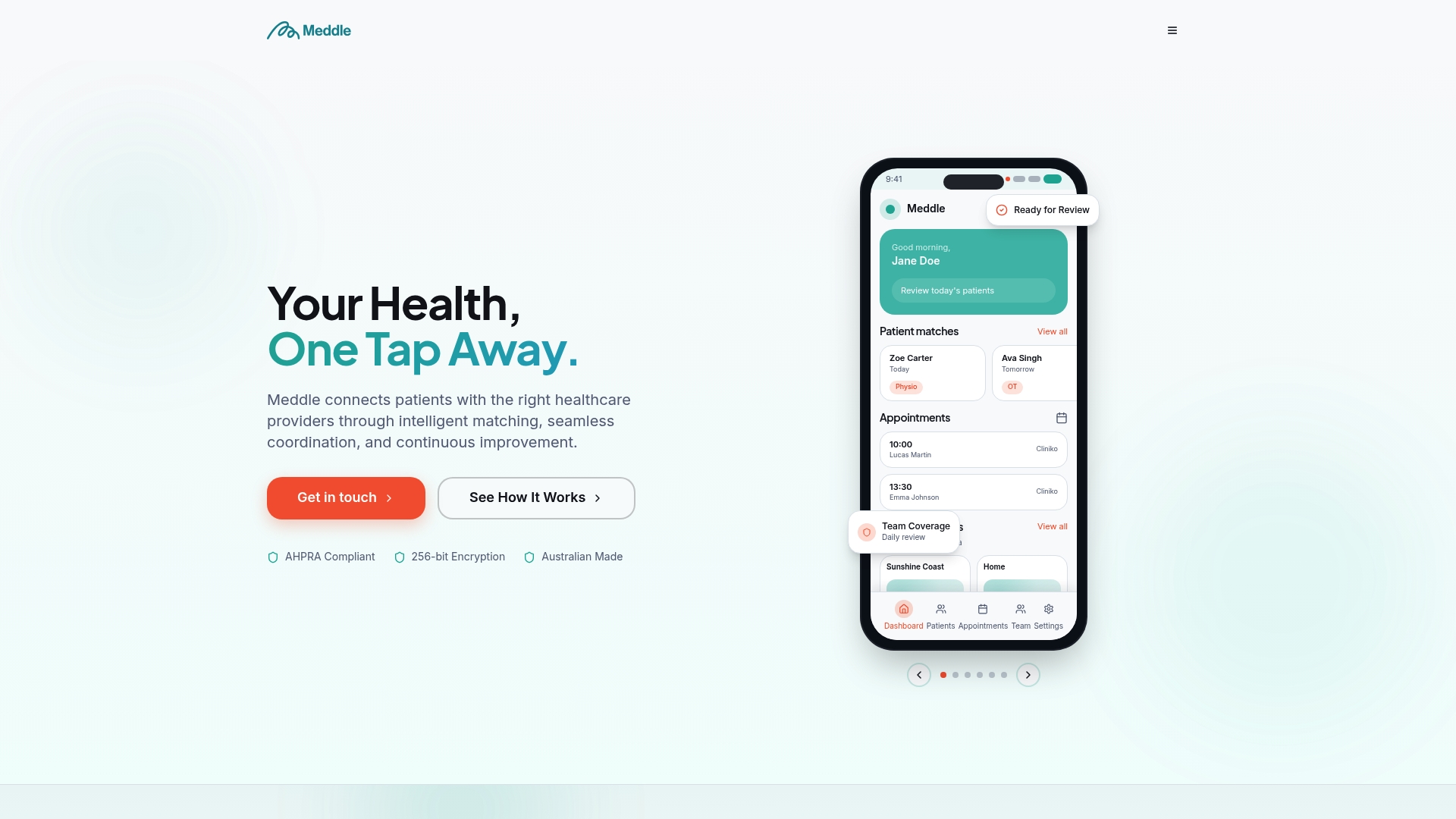
Practitioners can review how it fits their workflow on the practitioner benefits page, and clinics ready to see rollout costs can check the simple rollout pricing from $40 per practitioner per month (ex GST, $250 monthly minimum, SMS and email notifications included). If you’re a clinic manager weighing this against a manual process, start there and see what a well-routed referral actually looks like.
Sources
-
Agentic AI in Australian healthcare - Pulse+IT
FAQ
What does AI patient matching actually mean?
It means using algorithms to pair a patient with the most suitable practitioner based on symptoms, preferences and referral data, then routing the referral so the clinic can confirm the booking.
Does AI patient matching replace clinical judgement?
No. Industry guidance treats it as a support layer for admin and scheduling, with clinical decisions and complex triage staying with qualified staff.
How does AI matching connect to a clinic’s existing software?
It depends on the tool and on your practice software, so ask what integration is live for your stack today. Either way, your PMS should stay the single source of truth.
What metrics should a clinic track during a pilot?
Referral-to-booked conversion, admin hours saved per week, and no-show rate are the three metrics worth measuring from the first week of any pilot.