Keep every RFS in Australia: NDIS referral management with templates

Successful NDIS referral management comes down to three actions: send a complete referral with the participant’s NDIS number, current plan and consent recorded, act inside the limited window the NDIA gives providers to accept or decline a request for service, and use a standard template so nothing is missing on the first attempt.
TL;DR:
- Sending a complete referral requires including the participant’s NDIS number, funding details, goals, and support information to avoid rejection or delays.
- Providers must respond within four business days to accept or decline a request; missing this window results in automatic reassignment and lost referral opportunities.
- The referral process begins with a digital request from the NDIA, not a phone call, and relies on accurate, standardized templates with features like e-signatures and conditional logic.
- Proper handover between support coordinators prevents referrals from being overlooked during transitions, and understanding support management types affects invoicing and claim submission.
- The 2026 reforms will limit participant plan management options to an approved panel from October 2027, so providers should keep documentation and compliance up to date now.
Table of Contents
- What is the NDIS referral process, step by step?
- When does the four-day window start, and what happens if you miss it?
- Who does what during an NDIS referral?
- What should a complete NDIS referral form include?
- How do you run NDIS referral management well?
- What do the 2026 NDIS reforms mean for referrals?
- How Meddle speeds up referral readiness
- The referral problems nobody flags until it’s too late
- Try Meddle before your next referral goes out
- Where to check the official rules
- Sources
- FAQ
What is the NDIS referral process, step by step?
An NDIS referral rarely starts with a phone call. It starts with a participant, or their support coordinator acting on their behalf, choosing preferred providers from the categories of support listed in their plan. Once that choice is made, the NDIA sends a Request for Service (RFS) to each provider through the provider portal. This single digital step is the actual trigger for everything that follows, including a provider’s ability to bill for any support delivered.
The RFS itself carries the operational detail a provider needs to assess fit before agreeing to take someone on. A well-formed RFS should include:
- The participant’s NDIS number and plan dates
- The relevant support category and funding type (core, capacity building or capital)
- A brief description of the participant’s goals or presenting need
- Contact details for the participant or their nominee
- Whether a support coordinator is involved and their contact information
Support coordinators carry real responsibility at this stage. Practice guidance expects them to check clinical fit, safety and evidence of need before sending a name forward, not simply pass on a referral because a provider has a vacancy. That verification step, done properly, is what separates a referral that sticks from one that bounces back a fortnight later because the provider doesn’t actually service that region or support type.
From here, the clock starts. Providers have four business days to accept or decline the RFS. Miss that window and the request is automatically redirected to the participant’s next preferred provider, whether or not anyone flagged it as a genuine “no”. For a provider with a full caseload and no portal alert set up, this is how good referrals quietly disappear.
Once a provider accepts, the practical work begins:
- An initial meeting or intake session to confirm scope and goals
- Drafting and signing a service agreement that sets out supports, pricing and cancellation terms
- Establishing reporting obligations, particularly if the NDIA or a support coordinator expects progress notes at set intervals
- Confirming how invoices will be submitted, which depends heavily on the participant’s plan-management type
That last point matters more than most referral guides admit. A self-managed, plan-managed or NDIA-managed participant changes not just who pays the bill, but how quickly, and what paperwork a provider needs ready before the first invoice goes out.
When does the four-day window start, and what happens if you miss it?
The four-business-day rule isn’t a guideline. It’s a hard cutoff built into the NDIA’s own systems, and it’s worth treating as the single most important deadline in your entire referral workflow.
The clock:
- Starts the moment the RFS lands in the provider portal, not when someone happens to check it
- Counts business days only, so an RFS that arrives Thursday afternoon effectively gives you until the following Wednesday
- Ends with automatic reassignment to another provider if no response is logged, with no manual override once that happens
Four business days. That’s the entire window the NDIA allows before a request for service moves on to someone else. For a clinic checking the portal weekly, that’s not a workflow gap, it’s a guaranteed loss of referrals.
The payment consequence is just as unforgiving as the timing one. A provider cannot submit claims against a participant’s plan until the RFS has been formally accepted in the provider portal. Plenty of providers start delivering supports on the strength of a verbal agreement or an email exchange, assuming the paperwork will catch up. It won’t. Claims submitted before that digital relationship is active get blocked, and chasing retrospective approval eats far more admin time than the four-day check would have.
Payment turnaround after that point depends on the participant’s management arrangement:
- NDIA-managed claims are submitted by the provider directly and processed against the agency’s standard payment cycle
- Plan-managed claims go through the participant’s plan manager, who pays the invoice and claims back from the NDIA, usually adding a short processing layer
- Self-managed participants pay providers directly and then claim reimbursement themselves, typically within two business days provided their claim includes the correct evidence, such as an ABN and a receipt
One more portal detail worth flagging: PRODA access for unregistered support coordinators was discontinued in November 2025, and anyone still relying on it needs myID set up with their ABN linked in RAM to keep accessing provider systems at all.
Who does what during an NDIS referral?
Referral breakdowns almost always trace back to one of four parties assuming someone else had a task covered. Clear roles fix that faster than any software ever will.
- Participant or nominee: gives informed consent for information sharing, provides their NDIS number and current plan, and makes the final call on which providers to approach.
- Support coordinator: checks clinical fit and safety before referring, arranges the RFS on the participant’s behalf, and prepares a proper handover report when moving a participant between coordinators, including an agreed end date and shared provider reports with consent.
- Plan manager: where the participant is plan-managed, pays provider invoices and supports the claims process, acting as the financial go-between rather than a clinical decision-maker.
- Provider: accepts or declines the RFS within four business days, meets any NDIA reporting requirements attached to the funding, and issues a service agreement that matches what was actually requested.
Where this most often goes wrong is the handover between support coordinators. A participant changes coordinator, the old one assumes the new one has full visibility of active referrals, and a request sits unaddressed in a portal nobody is checking. A written handover with a firm end date closes that gap.
The other frequent failure sits with providers who treat plan-management type as someone else’s problem. It isn’t. Whether a participant is self-managed, plan-managed or NDIA-managed changes your invoicing process from day one, and finding that out after the first session is delivered is too late.
What should a complete NDIS referral form include?
A referral that gets accepted on the first pass looks very different from one that bounces for missing information. The gap is almost always in the detail, not the intent.
At minimum, a referral needs:
- The participant’s full name and NDIS number
- Plan start and end dates, so the provider knows the funding window they’re working within
- Funding type and management arrangement (self, plan-managed or NDIA-managed)
- The provider’s ABN, where required for invoicing setup
- A goal-linked description of the support being requested, not just a diagnosis or category label
- Any risk flags or safety considerations the receiving provider genuinely needs, without turning the referral into a full clinical file
That last point takes judgement. Oversharing sensitive health information beyond what’s needed for safe service delivery creates privacy exposure under the Privacy Act, while undersharing risks a provider accepting a referral they’re not equipped to manage safely. The right amount is whatever a clinician would need to make an informed decision about fit, no more.
On the technical side, a handful of features consistently cut the back-and-forth that slows referrals down: e-signature fields so consent doesn’t require a separate email chain, conditional logic that only shows relevant fields based on support type, secure Australian-hosted data storage, and clean export into whatever practice management system the receiving provider actually uses. Meddle’s referral templates for GPs and support coordinators build in most of these by default, which matters most for coordinators sending dozens of referrals a month rather than one or two.

Pro Tip: Build one master referral template with every mandatory field locked in, then customise the goal and risk-flag sections per participant. It’s faster than starting from a blank form every time, and it stops the “forgot the NDIS number” rejection that wastes an entire four-day cycle.
How do you run NDIS referral management well?
Good referral management isn’t complicated, but it does need discipline. Teams that consistently get referrals accepted on the first attempt tend to run the same handful of checks every time.
- Confirm the referral is complete against a standard checklist before it’s sent, covering NDIS number, plan dates, funding type and consent.
- Match invoicing details and support item descriptions to NDIA formatting expectations before the first claim goes in, since misaligned billing metadata is one of the more common causes of payment rejection.
- Set a team SLA for checking the provider portal, ideally daily, and use automated alerts so a pending RFS never sits unseen for four days.
- When a participant changes support coordinator, issue a written handover with an agreed end date and share prior provider reports with consent.
| Practice | Why it matters | Who owns it |
|---|---|---|
| Referral readiness checklist | Cuts rejected or incomplete referrals before they’re sent | Support coordinator or referrer |
| Daily portal check | Prevents the four-day RFS window lapsing unnoticed | Provider admin team |
| Billing metadata alignment | Reduces claim rejections for plan-managed and NDIA-managed invoices | Provider and plan manager |
| Written handover with end date | Stops referrals stalling during coordinator transitions | Outgoing support coordinator |
None of this requires new software to start. It requires someone owning each line on that table, every week, without exception.
What do the 2026 NDIS reforms mean for referrals?
The 2026 legislative changes reshape one part of the system that referral managers should already be watching closely: plan management.
From 1 October 2027, the NDIA will establish a panel of approved plan management providers, with a six-month transition period built in around that date. In practice, this means participants who currently choose their own plan manager freely may eventually need to select from an approved panel, and providers who currently deal with a wide spread of independent plan managers should expect that list to narrow.
For anyone managing referrals today, the practical steps are straightforward:
- Start keeping registration and compliance evidence current now, rather than scrambling closer to the transition date
- Flag with participants and their nominees that plan-management choices may need revisiting once the panel takes effect
- Watch for further departmental guidance as the transition period approaches, since the panel’s exact composition and application process hadn’t been finalised at time of writing
The broader intent behind the reforms is tighter oversight and cleaner commissioning across the scheme, which should, in theory, reduce the kind of ad hoc, undocumented referral practices that cause disputes down the track. Providers who already run clean documentation and portal discipline have little to fear from that shift. Those relying on informal relationships with plan managers have more reason to get organised before 2027 than after.
How Meddle speeds up referral readiness
Meddle was built around the exact gap most referral tools ignore: the difference between a referral that’s technically sent and one that’s actually ready to be accepted. The Referral Readiness Checker flags missing fields, like an absent NDIS number or unclear funding type, before a referral ever reaches a provider’s inbox.
Two other tools matter for clinical fit specifically:
- The Referral Pathway Advisor helps GPs and coordinators identify the right allied health discipline before a referral goes out, cutting the “wrong specialty” bounce-back
A GP working through a typical Monday clinic list can run a referral through the readiness checker in under a minute, catch a missing plan end date, fix it, and send it knowing it’s already RFS-ready.
The referral problems nobody flags until it’s too late

The failures I keep seeing aren’t complicated. They’re missing plan documents, RFS windows that lapse because nobody was checking a portal, and clinical scope that was never quite clear between the referrer and the provider. None of these are edge cases. They’re the default outcome of a referral process that relies on memory instead of a template.
The fix isn’t more paperwork, it’s the right paperwork, sent once, checked against a standard before it leaves your outbox. Portal alert SLAs and closer coordination between GPs, support coordinators and providers close most of the remaining gaps. The teams that get this right treat referral management as an operational system with owners and deadlines, not an administrative afterthought squeezed in between client sessions.
— Taylor
Try Meddle before your next referral goes out
Meddle gives GPs, support coordinators and providers a faster way to send referrals that get accepted the first time, without the back-and-forth of chasing missing plan details after the fact. Start with the Referral Readiness Checker to see exactly what a complete referral needs, then pull a ready-made template from the referrer template library instead of building one from scratch.
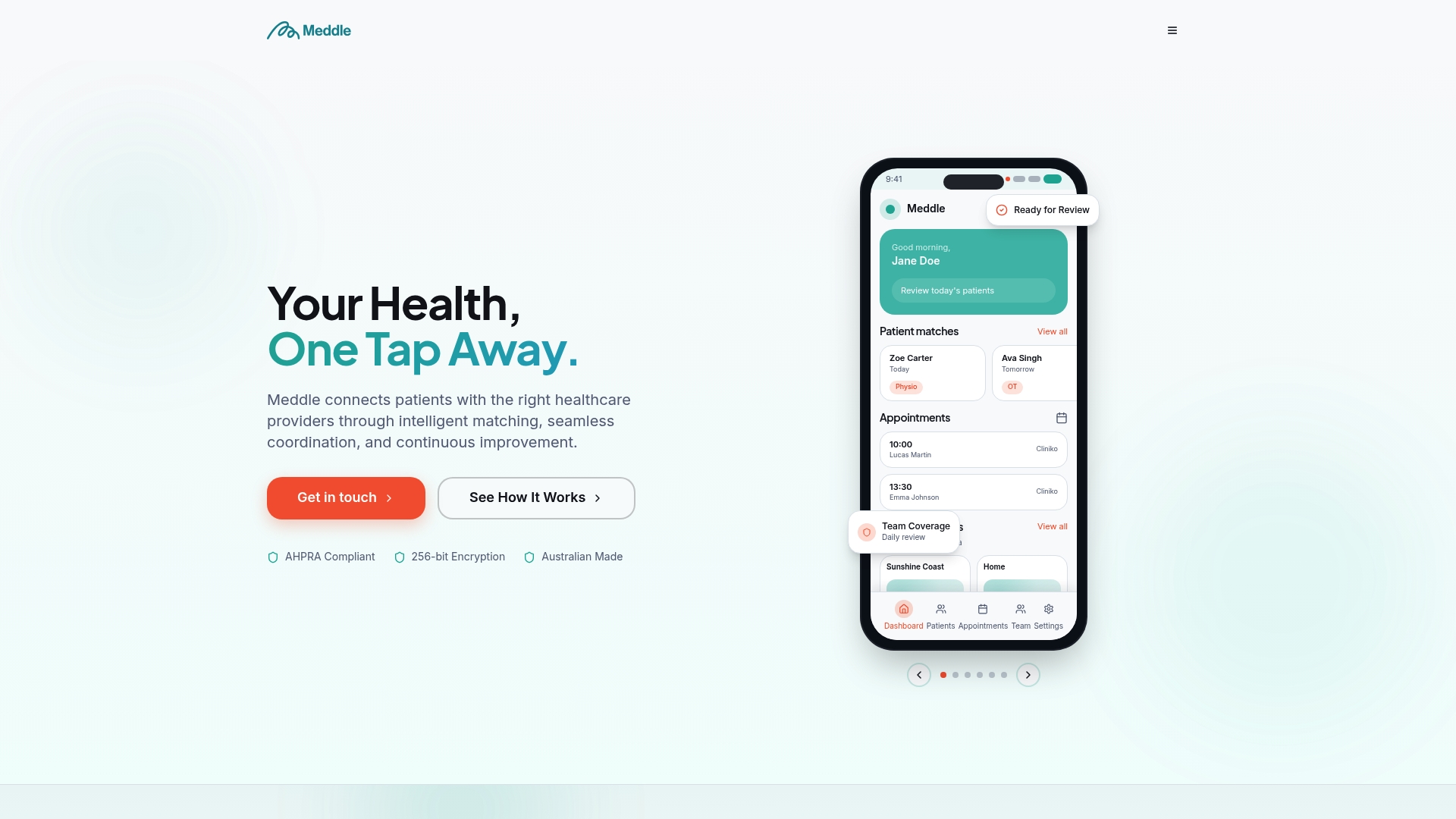
If you’re running a clinic and want to see how this fits into your existing intake process, how Meddle works walks through the matching and coordination features end to end, and pricing starts from A$40 per practitioner with a simple rollout for allied health teams. Run one referral through the platform this week and see how much of the back-and-forth disappears.
Where to check the official rules
For the primary source on any of the timelines or rules above, go straight to the NDIA. Its guidance covers the request for service process and plan management options in full, while the Department of Health’s 2026 reform summary covers the incoming panel changes. Broader funding and policy commentary is also available through outlets like Policyhop.
FAQ
What are the three types of NDIS plan management?
The three options are self-managed, plan-managed and NDIA-managed, and participants can combine them across different support categories rather than picking just one for their entire plan.
Who is the biggest NDIS plan manager in Australia?
The NDIS market includes many registered plan management providers, and the biggest by participant numbers isn’t publicly ranked by the NDIA. Under the 2026 reforms, plan managers will need to sit on an approved government panel from October 2027, which will make market share far easier to track.
Who is the largest NDIS provider in Australia?
There’s no single official ranking of the largest NDIS provider, since the scheme includes tens of thousands of registered and unregistered providers across wildly different service types. Size matters less to a referral outcome than whether a provider actually services the participant’s region and support category.
What is no longer funded by NDIS?
Supports that are the responsibility of another system, such as general medical care, everyday living costs unrelated to disability, or non-evidence-based interventions, generally fall outside NDIS funding. Always check a support’s alignment against the participant’s current plan and goals before referring, since funding rules are applied support by support rather than as a blanket list.
How long do providers have to accept an NDIS referral?
Providers have four business days to accept or decline a request for service once it appears in the provider portal, after which the NDIA automatically redirects it to another provider.