Referral analytics for allied health: a practical playbook
Referral analytics is the systematic measurement of patient referral flows: who refers, how many referrals convert to booked appointments, how long patients wait, and which sources yield the best clinical outcomes. The immediate first step for any clinic is straightforward — log every referral the moment it arrives and start measuring your referral-to-appointment conversion rate. That single habit closes the gap between referrals received and patients actually seen.
On day one, capture at minimum:
- Referrer name and organisation (GP, hospital, NDIS coordinator, self-referral)
- Date received and the channel it arrived through (fax, email, portal, patient-carried letter)
- Referral type (condition, discipline requested, urgency flag)
- Patient contact status (not yet contacted, contact attempted, appointment booked)
Pro Tip: To recover silent referrals quickly, set a 48-hour rule: any referral with no patient contact attempt logged within two business days triggers an automatic follow-up task for your front desk.
Key takeaways
Consistent referral logging and conversion tracking are the foundation of every improvement a clinic can make to its referral programme.
| Point | Details |
|---|---|
| Log referrals immediately | Capture referrer, date, type, and contact status on arrival to prevent leakage. |
| Track conversion rate first | Referral-to-booked-appointment rate is the single most actionable KPI for most clinics. |
| Automate nudges early | Automated contact reminders reduce abandonment without adding to clinical workload. |
| Track GPCCMP visit counts | Under the GPCCMP (from 1 July 2025), annual visit caps are shared across providers — flag patients at 80% of their cap at intake. |
| Use Meddle for the full workflow | Meddle’s Referral Quality Scorecard, conversion dashboard, and automated nudges implement the KPIs and workflow described in this guide. |
Table of Contents
- What does referral analytics actually track for allied health?
- How should you set up your digital referral workflow?
- How do you implement referral tracking in a small clinic?
- How do you turn referral data into better outcomes?
- What privacy and regulatory rules apply to referral data in Australia?
- What ROI can you realistically expect from referral analytics?
- How does Meddle support referral analytics for Australian clinics?
- Why starting small is the right call
- Meddle gives your clinic a referral analytics system that works from day one
- Sources
- FAQ
What does referral analytics actually track for allied health?
The core metrics that matter for allied-health clinics map directly to clinical and financial outcomes. Referral volume alone tells you very little; the metrics below tell you whether your referral programme is working.
| KPI | Business question it answers | How to calculate | Example target |
|---|---|---|---|
| Referrals received | Are referral volumes growing? | Count per period, by source | Baseline + 10% growth per quarter |
| Referral conversion rate | What share become booked appointments? | Booked ÷ referrals received × 100 | 75–85% |
| Time-to-first-appointment | How long do patients wait? | Date booked minus date referral received | Under 10 business days |
| Referral abandonment rate | Where are we losing patients? | (Received minus booked) ÷ received × 100 | Below low threshold |
| Outcomes-linked referrals | Which sources yield better clinical results? | % of referrals reaching discharge goal | Track by referrer cohort |
| Revenue per referral source | Which referrers drive the most value? | Gross revenue ÷ referrals from that source | Varies by discipline |
| GPCCMP visit count | Are patients approaching their annual cap? | Cumulative subsidised visits per patient | Flag near annual cap limit |
A 2026 qualitative study found that referral decisions are shaped not only by clinical presentation but by trusted professional relationships and affordability, and that system constraints often determine whether a referral proceeds at all. That finding matters for analytics: if your data shows a high abandonment rate from a particular referrer, the cause may be cost barriers or wait times rather than clinical mismatch.
How should you set up your digital referral workflow?
The PHN Optimal Digital Workflow for Allied Health Referrals identifies the capture points every clinic should digitise first. The end-to-end flow looks like this:
Referral arrives → intake logging → triage → patient contact → booking → attendance → clinical outcome → referrer report
Each arrow is a data capture point. Ownership matters:
- Front desk logs channel, referrer, and date on arrival
- Clinic manager assigns triage priority and flags outstanding referrals
- Lead clinician records outcome data and discharge-to-goal status
- Platform or IT automates nudges and generates referrer reports
Your integration checklist should cover: EHR or practice management system, online booking platform, SMS and phone logs, intake forms (paper and digital), My Health Record upload channels, and any referral portal your local PHN or hospital uses.
Mixed inbound channels are the norm in Australian allied health. Fax, email, patient-carried letters, and portal submissions all need to feed into a single queue. Normalise them by assigning each channel a source code at intake so your reports can segment by channel without manual reconciliation later.
Pro Tip: Standardise your referral templates so that GPs and coordinators send the fields you need. A one-page template reduces triage time and improves data completeness from day one.
How do you implement referral tracking in a small clinic?
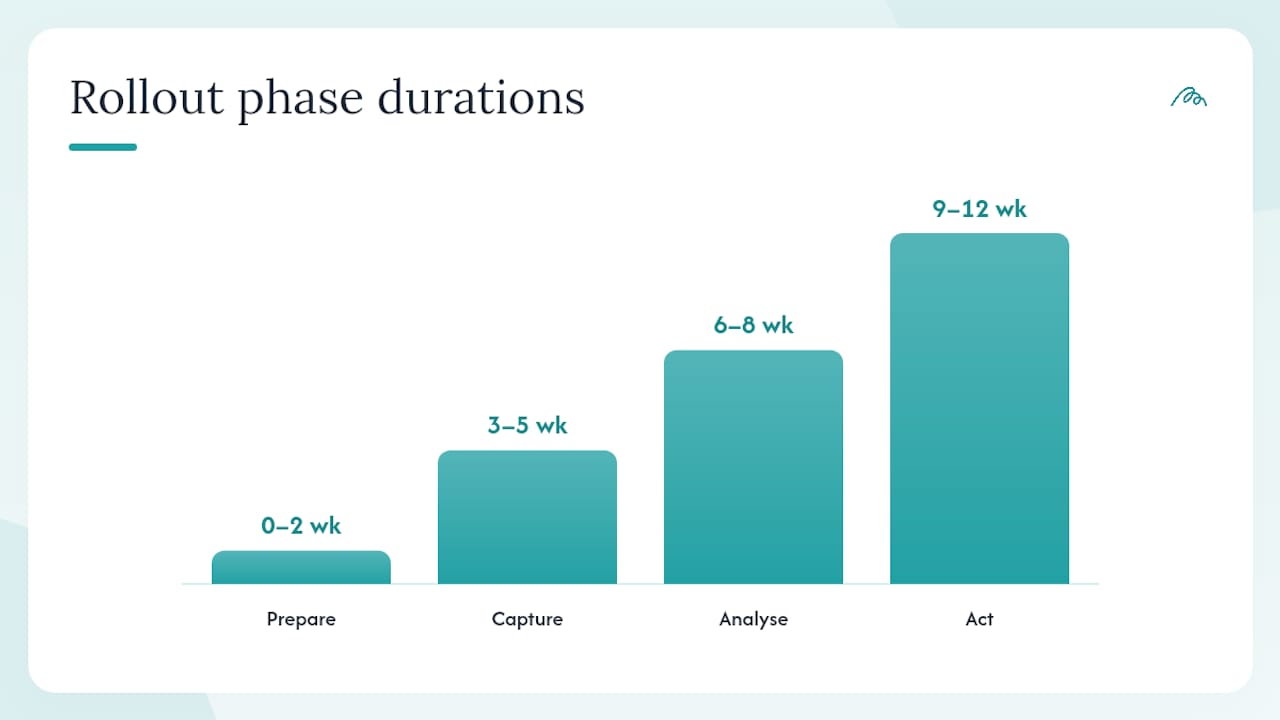
Break rollout into four phases. This timeline works for a clinic of two to ten practitioners.
| Week | Phase | Milestone |
|---|---|---|
| 0–2 | Prepare | Single referral log live (spreadsheet or platform); staff briefed on capture fields |
| 3–5 | Capture | All inbound channels feeding one queue; contact-status field updated daily |
| 6–8 | Analyse | Dashboard showing referrals by source, conversion rate, and time-to-first-appointment |
| 9–12 | Act | First optimisation sprint complete; referrer report sent; GPCCMP visit counts tracked |
If you are starting with spreadsheets, prioritise these dashboard fields first: referrals by source, conversion rate, outstanding referrals older than 10 business days, and time to first appointment. Add integrations in this order: booking system first (highest data volume), then EHR for outcome linkage, then SMS logs for contact-attempt tracking.
Use the Referral Readiness Checker to assess where your clinic sits before committing to a tech stack. It surfaces gaps in your current workflow before you invest in automation.
How do you turn referral data into better outcomes?
Analytics only pays off when it drives action. Run short, measurable experiments against specific KPIs.
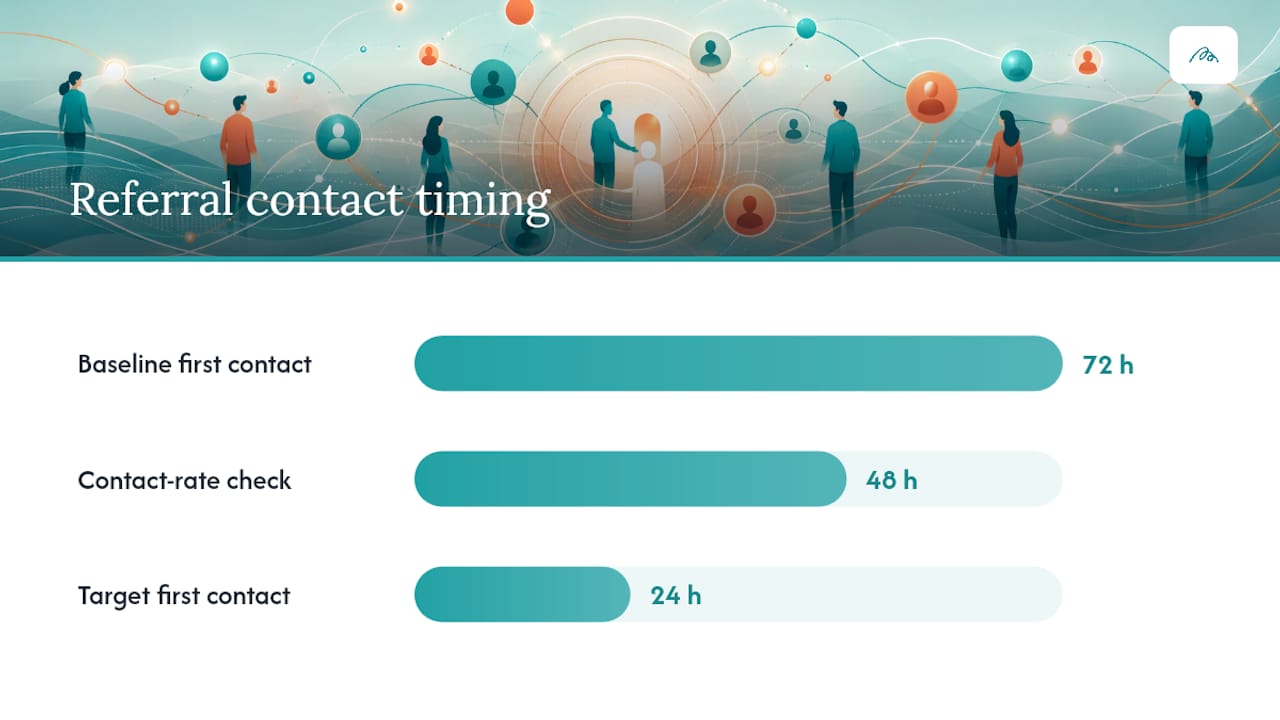
- Faster first contact: Reduce time from referral receipt to first patient contact attempt from 72 hours to 24 hours. Track: contact rate at 48 hours, conversion rate. Measure over four weeks.
- SMS appointment reminders: Add automated SMS at 48 hours and 24 hours before appointment. Track: no-show rate, cancellation lead time. Measure over six weeks.
- GP report turnaround: Commit to sending outcome reports within five business days of discharge. Track: referrer satisfaction (informal survey), repeat referral rate from that GP. Measure over one quarter.
- Priority booking for high-value referrers: Reserve two appointment slots per week for referrers whose patients show high conversion and good outcomes. Track: referral volume from that source, revenue per referral. Measure over eight weeks.
Segment your referrers into three tiers based on volume, conversion rate, and outcome quality. High-volume, high-conversion referrers deserve proactive engagement: personalised reports, direct clinician contact, and priority access. Mid-tier referrers benefit from standardised feedback loops. Low-volume sources may warrant a conversation about whether the referral pathway is working for both parties.
Pro Tip: Run one experiment at a time. Changing contact speed and SMS reminders simultaneously makes it impossible to know which lever moved the needle.
What privacy and regulatory rules apply to referral data in Australia?
Referral data is personal health information under the Privacy Act 1988 (Cth) and the Australian Privacy Principles. Storing, sharing, or analysing it requires appropriate consent, access controls, and retention policies.
Practical policies every clinic should have in place:
- Consent at intake: Confirm patients understand their referral data will be stored and may be shared with referrers for outcome reporting.
- Data retention limits: Follow your professional association’s guidance (typically seven years for adults, longer for children) and document your retention schedule.
- Access controls: Restrict referral data to treating clinicians and authorised admin staff; log access where your system allows.
- Secure messaging: Use encrypted channels for referral communications rather than standard email or unsecured fax where possible.
- My Health Record: Understand when uploading referral or outcome data to My Health Record is appropriate and obtain patient consent before doing so.
Under the GPCCMP (effective 1 July 2025), subsidised allied-health visits are capped annually and shared across providers in a calendar year. Tracking each patient’s visit count at intake is not optional — it directly affects billing and care planning. The APA’s cost modelling estimated potential system and patient savings of around $162.7 million if direct physiotherapist referrals with MBS rebates reduced avoidable GP visits, which signals how significantly policy shifts can reshape referral volumes and the economics of your practice. For borderline privacy or consent questions, consult your clinic’s legal or privacy adviser.
What ROI can you realistically expect from referral analytics?
Benchmarks vary by discipline and region, but the directional signals from published modelling are consistent: closing the referral-to-appointment gap and reducing no-shows are the two fastest paths to incremental revenue.
| Lever | Typical improvement range | Revenue impact mechanism |
|---|---|---|
| Referral conversion rate | From 60% to 75–85% | More booked appointments per referral received |
| No-show rate reduction | 5–15 percentage points with SMS reminders | Fewer lost appointment slots |
| Time-to-first-appointment | Reduction of 3–7 business days | Reduced patient dropout before first visit |
| Referrer report turnaround | Under a week | Higher repeat referral rate from GPs |
At an average consultation fee of $120, that is $960 in additional monthly revenue, or roughly $11,500 per year, before accounting for downstream visits. Staff time invested in the first sprint is typically 2–4 hours per week for a clinic manager; automation reduces that to under one hour once the workflow is established.
Small clinics generally see faster payback from process changes (faster contact, better templates) than from technology investment alone. Automation accelerates the gains but is not a prerequisite for the first improvement cycle. Meddle’s practitioner benefits page outlines the outcomes clinics commonly report from referral-centred tooling.
How does Meddle support referral analytics for Australian clinics?
Meddle’s platform is built around the workflow and KPIs described in this guide. Key features include:
- Single referral queue: All inbound referrals, regardless of channel, surface in one dashboard with stage visibility and outstanding-referral flags.
- Referral-to-booking conversion dashboard: Tracks conversion rate, time-to-first-appointment, and abandonment rate in real time.
- Referral Quality Scorecard: Maps referral volume, conversion, and outcome quality by referrer so you can identify your highest-value sources.
- Referral Pathway Advisor: Guides clinicians and referrers to the right discipline and service level, reducing triage time.
- Automated nudges: Triggers contact-attempt reminders and appointment confirmations without manual follow-up.
- Secure messaging: Encrypted referrer communication that satisfies Australian Privacy Principles requirements.
These features map directly to the KPIs in the table above. The Referral Pathway Advisor addresses the triage step; the Scorecard addresses referrer segmentation; the conversion dashboard addresses the core referral analytics view. Meddle’s AI-powered matching and booking integrates with clinic workflows to reduce admin friction and surface the data you need without building a custom reporting stack.
Why starting small is the right call
The clinics that get the most from referral performance tracking are rarely the ones that launched with the most sophisticated platform. They are the ones that started with one clear KPI, built a habit of logging every referral, and ran one experiment at a time.
The temptation is to wait until the system is perfect before measuring anything. That approach costs you months of data you cannot recover. A spreadsheet with four fields, updated daily, will teach you more in six weeks than a half-configured platform that nobody uses consistently.
Analytics should serve clinical priorities, not compete with them. If your team is spending more time on reporting than on patient care, the system is misconfigured. The goal is a workflow where data capture happens as a natural by-product of the referral process, and insights surface without requiring a clinician to run a report.
Meddle gives your clinic a referral analytics system that works from day one
Most allied-health clinics in Australia are losing referrals they never knew they had. Meddle fixes that with a purpose-built platform that captures every inbound referral, tracks conversion in real time, and surfaces the insights your team needs to act, without requiring a data analyst or a custom reporting build.
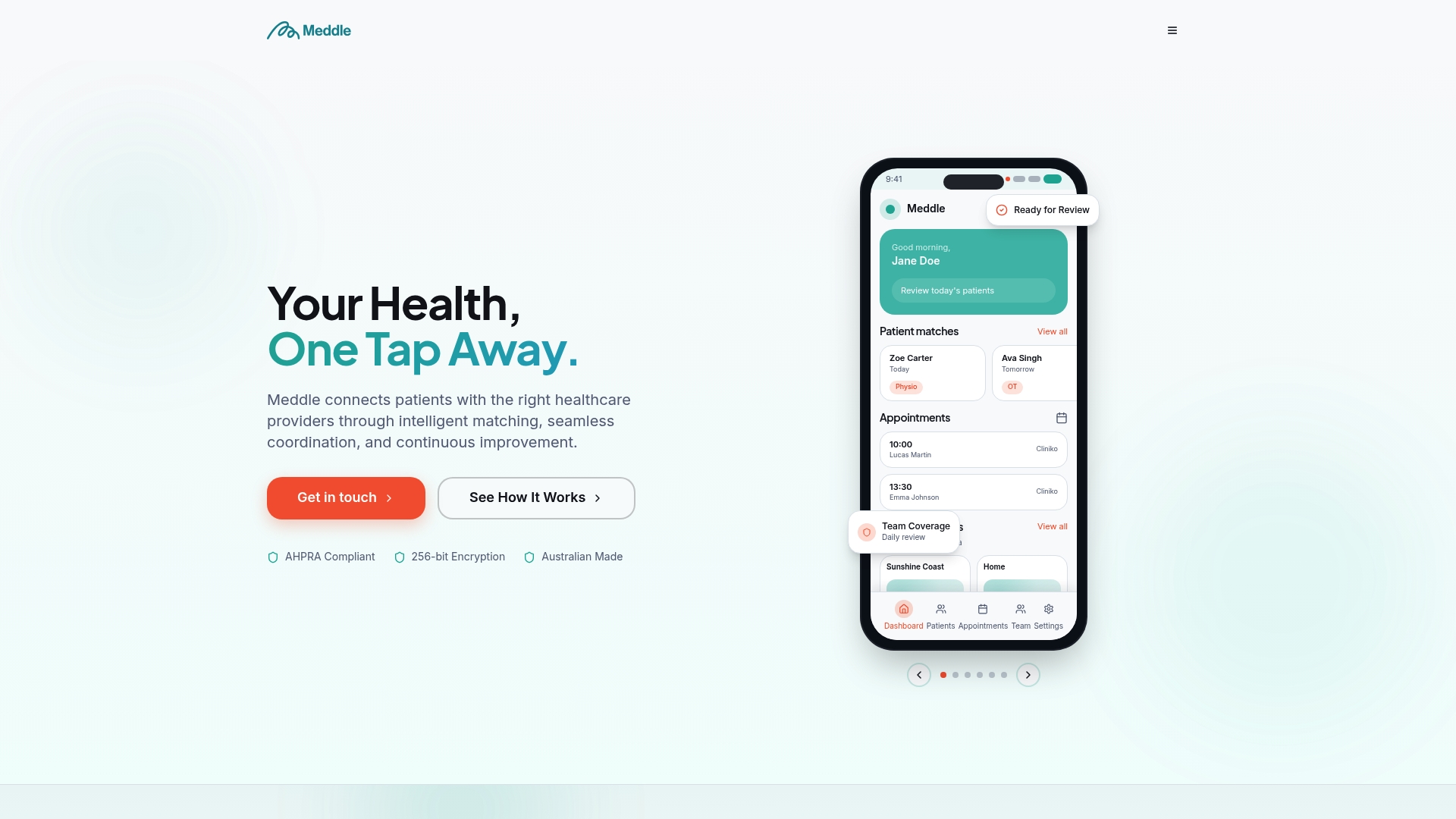
From the single referral queue to the Referral Quality Scorecard and automated patient nudges, Meddle implements the workflow described in this guide out of the box. Rollout starts from A$40 per practitioner, and the platform is built for Australian allied-health compliance requirements from the ground up. Visit Meddle’s practitioner benefits page to see the specific outcomes clinics report, then book a demo to see the referral dashboard live.
This article is general information, not a substitute for advice from a qualified doctor. Consult a qualified healthcare professional about your own circumstances before acting on anything here.
Sources
- Factors influencing referrals amongst allied health and medical practitioners managing people with musculoskeletal conditions in Australian primary care | BMC Health Services Research | Springer Nature Link
- Optimising Digital Workflow for Allied Health Referrals
FAQ
What is referral analytics in allied health?
Referral analytics is the measurement of patient referral flows: sources, volumes, conversion to booked appointments, wait times, and clinical outcomes. It gives clinics the data to identify where referrals are lost and which sources deliver the best patient results.
What is a good referral conversion rate for an allied-health clinic?
A target referral conversion rate within a reasonable range is common for most disciplines, meaning a majority of referrals received result in a booked appointment.
How does the GPCCMP affect referral tracking?
Under the GPCCMP (effective 1 July 2025), patients have an annual cap on subsidised allied-health visits shared across all providers. Clinics must track each patient’s visit count at intake to avoid billing errors and to plan care appropriately.
Which KPI should a clinic measure first?
Start with referral conversion rate: booked appointments divided by referrals received, expressed as a percentage. It is the fastest indicator of whether your intake process is working and the most directly linked to revenue.
How does Meddle support referral performance tracking?
Meddle’s platform includes a single referral queue, a referral-to-booking conversion dashboard, and a Referral Quality Scorecard that tracks volume, conversion, and outcome quality by referrer, mapping directly to the KPIs described in this guide.