Australian clinics: Restrict bookings by referral and meet three APPs

Yes, clinics can require a clinician referral before a patient books an appointment, provided the policy is clinically justified and clearly communicated. The immediate priority is publishing a plain-language policy and privacy notice, then confirming your booking platform can collect and verify referral details securely, in line with OAIC health privacy guidance and MBS referral rules. This isn’t a blanket barrier to care. It’s a triage tool.
TL;DR:
- Require referrals only for appointment types with a clinical or funding basis, then pilot the workflow with a small group of real referrers.
- Treat referral details as sensitive health information: collect only necessary fields, explain their use at collection, and disclose referrer sharing in the privacy notice.
- Check signatures, dates, referrer details, and the referral reason against the claimed item; validity periods vary, and expired referrals can jeopardize rebates.
- Keep urgent cases, acute pain, and eligible self referrals out of automatic rejection; train reception to escalate, document exceptions, and follow up for missing paperwork.
- Before launch, confirm encryption, access controls, audit logs, breach response timelines, and a written agreement that assigns privacy responsibilities between clinic and vendor.
Table of Contents
- Pre-go-live checklist: what your clinic needs before enforcing referral-only booking
- Step-by-step implementation: design the booking flow and verify referrals
- Privacy and data obligations: handling referral information under the Privacy Act
- Medicare, MBS and referral validity: what to check before you bill
- Templates and communication: accepting referrals and keeping referrers informed
- Platform vetting: security, contracts and assurances to seek from vendors
- Exceptions, triage and clinical safety when referrals are missing
- Author perspective: balancing access and clinical safety with referral-only booking
- How Meddle supports referral-only booking
- FAQ
- Sources
Pre-go-live checklist: what your clinic needs before enforcing referral-only booking
Before you switch on referral-only booking, get the groundwork right. A rushed rollout creates confusion for reception staff and frustration for patients who show up without the right paperwork.
Work through this list first:
- Publish a privacy notice and booking policy, and brief every staff member who answers the phone or manages the booking page.
- Decide your minimum referral fields: referring practitioner name, provider or place number, date, reason for referral, and a signature or digital confirmation.
- Choose a verification method, whether that’s a manual check, a secure referrer email domain, or a referrer portal.
- Document where referral data is stored, who can access it, how long you keep it, and what happens if there’s a breach.
- Write a triage SOP for exceptions, so reception knows exactly what to do when a referral is missing.
Pro Tip: Run your checklist past your privacy officer and your senior clinician together. One catches the legal gaps, the other catches the clinical ones.
Step-by-step implementation: design the booking flow and verify referrals
Once the groundwork is set, build the booking flow itself. Start narrow and widen the scope once you know the process works.
- Scope the requirement. Decide which appointment types genuinely need a referral, by condition, by modality, or by funding source, rather than applying the rule across the board.
- Design the intake form. Include the required referral fields, a file upload or referral code field, and any metadata you’ll need later for MBS reporting.
- Set your verification path. You can check the provider number against a register, contact the referrer directly, or accept referrals through a secure referrer portal that logs the submission.
- Connect the referral to clinical workflow. Link each booking to the patient’s clinical notes and to a correspondence template for updating the referrer, so nothing falls through the cracks between admin and treatment.
- Pilot before you scale. Run the new flow with a small group of referrers first, gather feedback from reception and clinicians, and adjust your standard operating procedures before rolling it out clinic-wide.
The pilot step matters more than clinics expect. A form that looks clean on paper often reveals friction once real referrers try to use it, whether that’s a GP practice with an outdated fax-based process or a specialist who expects a portal login. Testing with a handful of real referrals before a full rollout saves you from redesigning the form twice.
Privacy and data obligations: handling referral information under the Privacy Act
Referral details count as sensitive health information, which means the Australian Privacy Principles apply with extra weight. Three APPs matter most here: APP 3 governs what you’re allowed to collect, APP 6 governs how you use or disclose it, and APP 11 governs how securely you store it.
Practically, that means:
- Collect only the referral details you actually need, nothing more.
- Tell the patient at the point of collection why you’re gathering referral information and what it’s used for, which satisfies the primary purpose rule.
- Be transparent in your privacy notices about sharing information with referrers, since OAIC guidance confirms disclosure to a referrer often relies on the patient’s reasonable expectation rather than requiring separate explicit consent.
- Have a breach response plan ready, including your Notifiable Data Breaches obligations.
Clinics must have a privacy policy that discloses how health information is collected and used, a requirement confirmed directly by the OAIC. Skipping this step is one of the most common compliance gaps we see when clinics change their booking rules without updating their privacy documentation.
Medicare, MBS and referral validity: what to check before you bill
Referral rules aren’t just a privacy matter, they affect whether a rebate is paid at all. The Health Insurance Determination sets out exactly what a referral must contain for specific MBS items, and getting this wrong creates billing headaches later.
Check for these elements on every referral:
- A signature from the referring practitioner and a clear date.
- The referrer’s details, including provider number where relevant.
- A stated reason for the referral, matched to the item being claimed.
- Awareness that referral validity periods vary by item group, so clinical usefulness and rebate eligibility aren’t always the same thing.
An expired or incomplete referral doesn’t necessarily mean the patient can’t be seen. It means your billing team needs to document the decision and flag the rebate risk before the appointment, rather than discovering it at claim time.
Templates and communication: accepting referrals and keeping referrers informed
A referral-only policy only works if referrers know exactly what you need from them. Host editable referral templates somewhere easy to find, whether that’s your referrer portal or a dedicated page on your clinic website, so GPs and support coordinators aren’t guessing at the format.
Keep the workflow tight:
- Specify the minimum clinical detail you need in the referral wording, not just the administrative fields.
- Send automated confirmations to both the patient and the referrer once a booking is made.
- Follow up after the first attendance so the referrer knows the loop is open.
- Close the loop with a report back to the referrer, which keeps multidisciplinary care coordinated rather than siloed.
Clinics that manage light therapy referrals report similar value in structured coordination between referrers and treating clinicians, a pattern echoed in broader clinical workflow guidance on keeping referral communication consistent across providers.
A referrer portal built specifically for GPs and support coordinators removes a lot of this friction, since referrers interact with one consistent interface instead of a different fax number or email inbox for every clinic.

Platform vetting: security, contracts and assurances to seek from vendors
Your booking platform is handling sensitive health information the moment a referral is uploaded, so vet it the same way you’d vet any clinical system. Ask vendors directly about data residency and whether information is encrypted both at rest and in transit.
Look for these specific assurances:
- Alignment with APP 11 security obligations, stated explicitly, not implied.
- A clear incident response process with defined breach notification timelines.
- Recent penetration-test summaries, or at least evidence that testing happens regularly.
- A written data-processing addendum that clarifies who holds APP entity responsibilities and who is simply the service provider.
- Audit logs, role-based access controls, and secure handling of referral attachments and integrations.
Pro Tip: Ask the vendor what happens, step by step, in the first 24 hours after a suspected breach. A vague answer tells you more than a polished brochure.
Recent enforcement activity shows providers remain accountable for third-party platform failures, as seen in the OAIC’s action against Australian Clinical Labs over the Medlab Pathology breach. Vetting your vendor properly now is cheaper than managing the fallout later. Our guide on securing patient records walks through the same checks in more depth.
Exceptions, triage and clinical safety when referrals are missing
Referral-only booking should never mean turning away someone who needs urgent care. Define your exceptions clearly and give reception a script they can follow without hesitating.
- List permitted exceptions upfront: emergencies, acute pain presentations, and self-referrals for services that don’t legally require one.
- Give reception a clear escalation path to a clinician for an immediate safety check when no referral is on hand.
- Record the exception, chase the referrer afterwards for documentation, and note the patient’s consent to proceed.
- Use real scenarios to train staff, so a nervous receptionist doesn’t turn away someone in genuine need out of caution.
A documented exception process protects both the patient and the clinic, and it stops referral rules from becoming a safety risk in practice.
Author perspective: balancing access and clinical safety with referral-only booking
Referral rules genuinely improve continuity of care. They cut down on appointments that go nowhere and help multidisciplinary teams stay coordinated around a shared patient. But access trade-offs are real, and clinics that ignore them risk turning away people who needed to be seen that day.
The fix isn’t abandoning the policy, it’s building low-friction pathways for urgent or vulnerable patients and tracking three numbers closely: referral conversion rate, no-show rate, and referrer satisfaction. Measure before you expand the rule to more appointment types.
— Taylor
How Meddle supports referral-only booking
Our platform supports workflows including referral uploads, referrer portals, secure data handling, and notifications to keep patients and referrers informed with minimal admin.
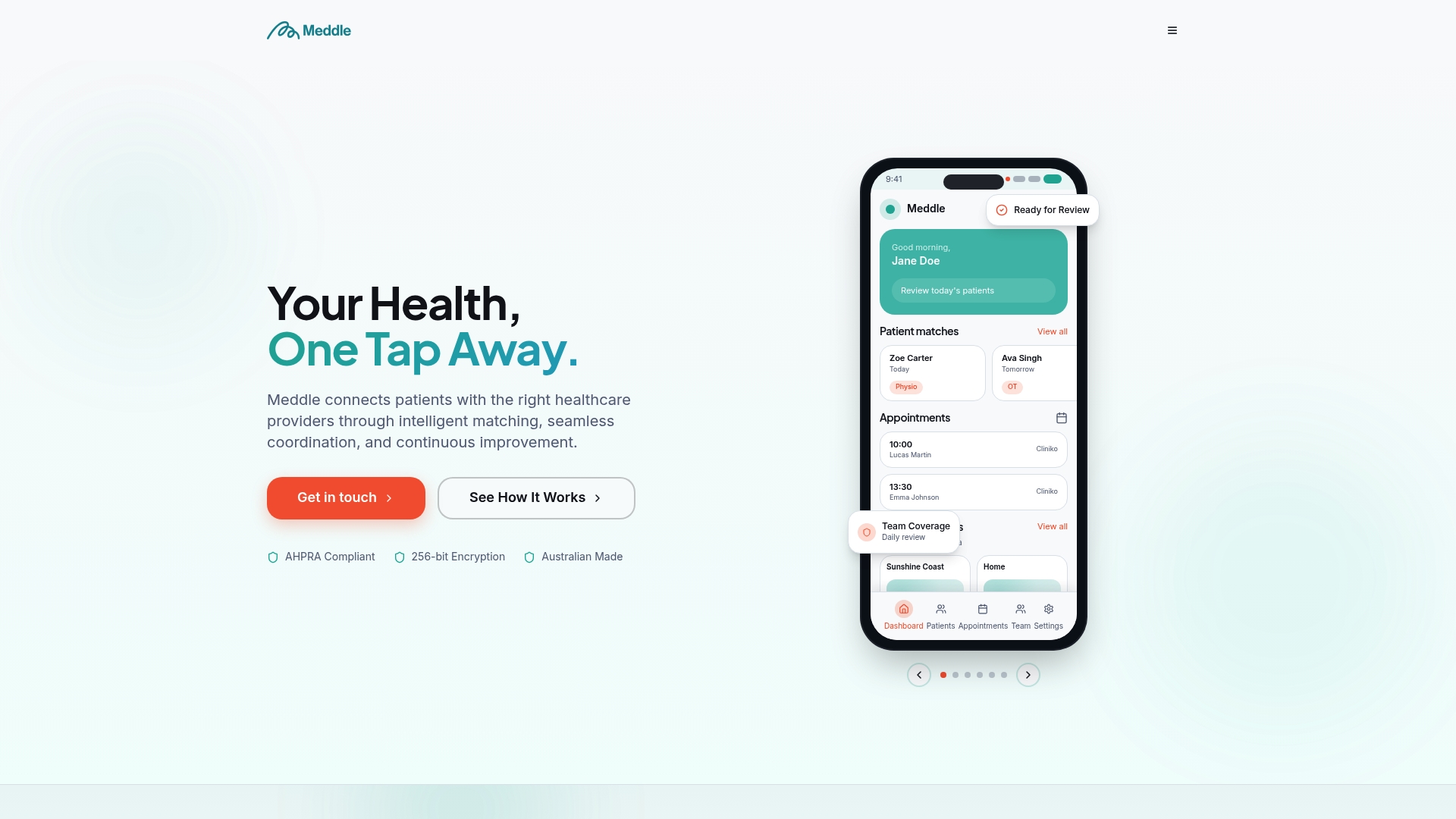
Our matching approach helps connect patients with appropriate practitioners, and referral data is treated with strong privacy measures that align with clinical requirements. If you’re setting up or refining a referral-only policy, our pricing page outlines the Simple Rollout plan alongside add-ons like SMS Notifications and CRM Integration, or you can explore how matching works on our find care page to see if it fits your clinic’s referral flow.
This article is general information, not a substitute for advice from a qualified doctor. Consult a qualified healthcare professional about your own circumstances before acting on anything here.

FAQ
Can a clinic legally refuse to book patients without a referral?
Clinics can require a referral for specific appointment types when there’s a clinical reason for it, provided the policy is transparent and documented. Exceptions for urgent or self-referred cases should remain in place so no patient is denied necessary care outright.
What information must a valid Medicare referral include?
A valid referral generally needs the referrer’s signature, the date, their details including provider number, and a stated reason for the referral, as set out in the Health Insurance Determination. Many specialist referrals remain valid for 12 months, according to Healthdirect, though this varies by item and referral type.
Do clinics need patient consent to share referral details with a referrer?
Explicit separate consent usually isn’t required if the patient’s reasonable expectation is met and the clinic is transparent in its privacy notice, as explained in OAIC guidance on health privacy. Clinics should still disclose this clearly at the point of collection rather than relying on assumption.
How should a clinic handle an expired referral?
An expired referral may still be clinically useful even if it no longer supports a Medicare rebate, so clinics should document the decision and flag the billing risk before the appointment. Checking the MBS factsheet on referrals helps clarify whether the rebate is affected.
What should a clinic look for when vetting a booking platform for referral data?
Look for encryption at rest and in transit, clear alignment with APP 11 security obligations, and a written data-processing addendum defining responsibilities. A vendor should also be able to explain its breach notification process and share evidence of recent security testing.
Sources
- OAIC — Health information and your privacy rights
- Factsheet — Referrals for specialist services (MBS) — July 2026
- Health Insurance (Section 3C General Medical Services – Allied Health and other Primary Health Care Services) Determination 2024