Clinic playbook: evidence backed routines to lift referral conversion
The fastest gains come from five moves: measure conversion properly, contact new referrals within 48 hours, run every referral through one tracked queue, send GPs a standard clinical update within a week, and pilot digital triage for high-volume pathways. Clinics that fix the operational basics first tend to see movement in conversion metrics within four to eight weeks, well before any technology investment.
TL;DR:
- Contact referrals within 48 hours using a scripted message to increase early conversion, as contact delay significantly reduces appointment attendance.
- Assign a dedicated owner to each referral and run weekly triage meetings to prevent referrals from stagnating and improve overall follow-through.
- Send timely, standardized updates to GPs within a week of the first consultation, which strengthens ongoing referral relationships and encourages repeat referrals.
- Pilot digital triage models for high-volume pathways, setting strict eligibility and response time targets to reduce inappropriate referrals effectively.
- Build a simple dashboard tracking conversion rate, time-to-first-contact, pending referrals, and no-shows, then measure any new interventions against baseline metrics.
Table of Contents
- How do you measure and improve referral conversion?
- What operational changes lift conversion within weeks?
- Why does GP communication affect referral conversion?
- Does digital triage actually reduce inappropriate referrals?
- What should a referral conversion dashboard include?
- How do you roll this out without stalling?
- Why fast pilots beat big projects
- How Meddle supports referral conversion in practice
- Sources
- FAQ
How do you measure and improve referral conversion?
Referral conversion is the share of referrals that become booked, attended appointments, not just booked ones. The formula is simple: attended appointments divided by referrals received, over a fixed period. A clinic receiving 200 referrals a month with 140 attended sits at 70%, and that number only means something once you know where the other 60 referrals went.
Referral leakage tends to fall into four buckets, and SimpleRef’s analysis of referral leakage treats the administrative bucket as the most fixable:
- Couldn’t contact: wrong number, no response after several attempts, no fallback channel.
- Patient declined: cost, timing, or the referral no longer felt relevant to them.
- Lost in process: the referral sat in an inbox, a fax tray, or a shared drive with nobody assigned.
- No-show: booked but never attended, often linked to long wait times between booking and appointment.
Run a three-month baseline before changing anything, using tools like KinCarer for care organisations to understand factors influencing referral decisions. Capture referrer name, assigned clinician, date received, first-contact date, and outcome for every referral. Time-to-first-contact is the metric most worth watching early: referrals contacted within 48 hours convert at meaningfully higher rates than those left sitting for a week, according to practical KPI guidance built from clinic operations data.
What operational changes lift conversion within weeks?
Most of the gain here has nothing to do with new software. It comes from treating referrals like tasks that need an owner, not paperwork that waits its turn.
- Put every referral on one board. A single queue, digital or otherwise, with a named owner against each entry. No referral sits unassigned overnight.
- Contact within 48 hours. Use a short script: confirm the reason for referral, offer two appointment times, and explain what happens next. A templated SMS (“Hi [name], your referral from Dr [GP] has been received. Reply YES to book your first appointment.”) often converts faster than a phone tag chain.
- Set a follow-up cadence. Unbooked referrals get a second contact at day 3 and a third at day 7, ideally through automated SMS reminders with a one-click booking link rather than another outbound call.
- Check subsidy and visit limits at intake. Confirming eligibility before the first appointment prevents the awkward, abandonment-triggering conversation at reception.
- Run a 15-minute weekly triage huddle. Front desk, a clinical lead, and whoever owns the referral board review anything stuck longer than five business days.
Pro Tip: Assign one person to “own” the referral board each week. Shared responsibility without a named owner is how referrals quietly go stale.
Why does GP communication affect referral conversion?
GPs refer more, and refer better, when they trust that a patient will be looked after properly. Generic marketing newsletters don’t build that trust. What does is a direct clinical update and evidence that their patient was actually seen.
Send a GP update within seven days of the first consultation. Keep it brief: diagnosis or working assessment, treatment plan, and any action needed from the referrer. That single habit does more for repeat referrals than most outreach campaigns.
- Book a recurring 15-minute phone catch-up with your top five referring GPs each quarter.
- Offer a co-consult session for complex cases rather than a written report alone.
- Log every GP update sent and track it as a KPI, not an informal courtesy.
- Use a consistent template so clinicians know what to expect and where to look for the key detail.
Direct clinician-to-clinician contact and clear “what, when and how” instructions matter more to referring doctors than any brochure. That’s the pattern worth building a workflow around.
Pro Tip: Treat the GP update template the same way you treat a clinical note. If it’s inconsistent, referrers notice, and referral quality suffers before volume does.

Does digital triage actually reduce inappropriate referrals?
Sometimes the better fix isn’t converting more referrals. It’s stopping the wrong ones from being sent in the first place.
The Strengthening Care for Children (SC4C) stepped-wedge trial placed paediatricians into general practice for co-consultations, and among GPs with baseline referral rates of 5% or higher, referrals dropped notably, with no adverse events and improved GP confidence in managing child health issues themselves.
Among high-referring GPs, embedding specialist co-consultation cut referral rates by 4.28 percentage points while improving clinician confidence.
Separately, eConsult and TReC pilot models diverted a measurable share of referrals to advice-only outcomes depending on specialty, with specialists spending roughly 20 minutes per response and average turnaround around 3.5 business days.
- Pilot digital triage where referral volume is high and clinical questions are often answerable without a face-to-face visit.
- Set strict eligibility criteria and response-time targets before launch to protect specialist capacity.
- Track clinician time per response so the pilot’s real cost is visible, not assumed.
- Check patient experience directly. A faster answer only helps if patients feel properly heard.
What should a referral conversion dashboard include?
A usable dashboard needs four fields: conversion rate, time-to-first-contact, referrals pending action, and no-show rate, tracked weekly against the baseline you established earlier.
- Set thresholds from your own baseline, not an industry average, since referral mix varies enormously between disciplines.
- Assign three roles to the weekly review: a board owner, someone who logs the data, and a clinical lead who signs off on anything unusual.
- Run any new intervention, like a new SMS template or a triage pilot, on a small controlled group first so you can actually attribute the change.
Referral analytics done properly is less about dashboards and more about someone actually looking at the numbers every week and asking why a figure moved.
How do you roll this out without stalling?
- Weeks 1 to 2: Build the single intake queue, assign an owner, set the 48 hour contact rule.
- Weeks 3 to 4: Deploy SMS templates and the GP update template; brief front desk on subsidy checks.
- Weeks 5 to 8: Baseline your metrics, run the weekly huddle, and decide if a triage pilot is warranted.
- Week 8+: Review the pilot against baseline conversion and time-to-first-contact before scaling anything.
Minimum tooling is modest: one intake queue, an SMS gateway, a templated GP update, and basic analytics. Nothing here requires a system overhaul.
Pro Tip: The most common pitfall isn’t a lack of ideas, it’s launching five changes at once and having no idea which one actually moved the number.
Why fast pilots beat big projects
Most clinics don’t fail at referral conversion because they lack ideas. They fail because the fix gets bundled into a twelve-month “digital transformation” project that never ships. The evidence backing structured referral interventions is consistent: proformas, peer feedback and clear pathways work, but only when someone actually runs them week to week. Pick one lever, run it for eight weeks, measure it against your baseline, then decide.
— Taylor
How Meddle supports referral conversion in practice
The operational habits above, a tracked queue, fast first contact, GP feedback loops, work better with the right tooling behind them. Meddle gives allied health clinics a structured referral intake, automated booking links patients can act on immediately, and standardised update templates that keep referring GPs informed without extra admin load.
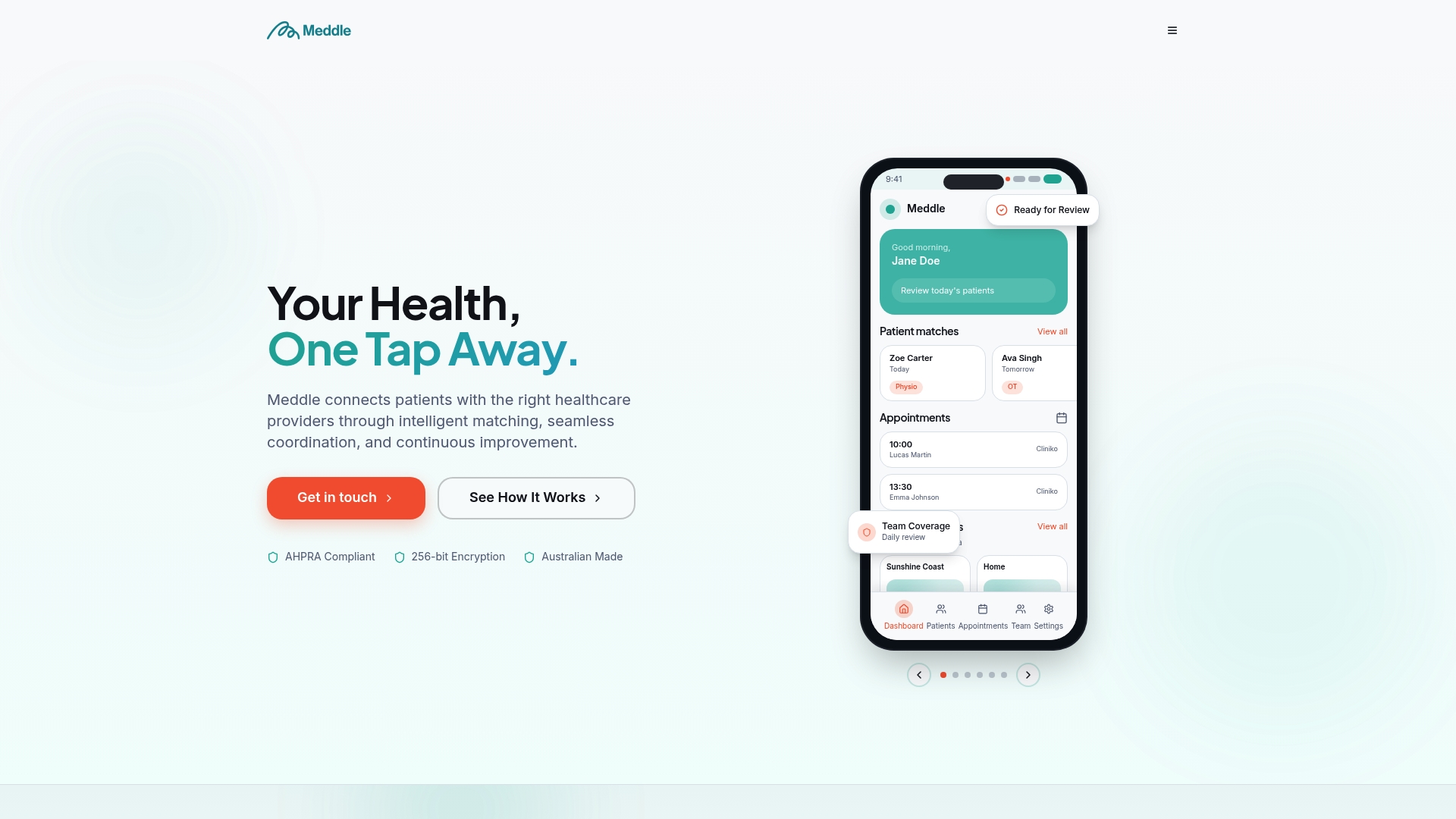
A matching algorithm can help route patients to the right practitioner from the first contact, which reduces the “couldn’t contact” and “lost in process” leakage buckets discussed earlier. Clinics can use analytics tools to track conversion and time-to-first-contact without building a spreadsheet from scratch. If you’re weighing up whether a formal referral pilot is worth running, start with the Allied Health Discipline Matcher to see how matching accuracy affects booking follow-through, or explore what Meddle offers clinics directly.
This article is general information, not a substitute for advice from a qualified doctor. Consult a qualified healthcare professional about your own circumstances before acting on anything here.
Sources
- Strengthening Care for Children (SC4C) — Medical Journal of Australia
- Interventions to improve referrals from primary care to outpatient specialist services — PMC
- Triaging GP referrals for specialist review to eConsultant — pilot study
- The Practice Manager’s Guide to Referral KPIs | SimpleRef
FAQ
What is a good referral conversion rate?
There’s no single universal benchmark, since it varies by discipline and referral source, but most clinics should aim to lift their own baseline steadily rather than chase an external number. Track your own conversion rate over three months first, then set improvement targets from there.
Is 2.5% a good referral conversion rate?
A 2.5% conversion rate would be extremely low for healthcare referrals, where established clinics with functioning intake processes typically convert well above that. If you’re seeing figures anywhere near that range, check for a “lost in process” bottleneck before assuming the referral source itself is weak.
What are the stages of referral conversion?
Common stages include referral received, first contact attempted, appointment offered, appointment booked, appointment attended, and outcome reported back to the referrer. Mapping your own referrals against these stages usually reveals exactly where leakage happens.
What are effective ways to increase referrals for a clinic?
Fast first contact, a single tracked intake queue, regular GP updates, and strong patient experience all drive both referral volume and quality. Platforms like Meddle that automate matching and booking links can reduce the administrative leakage that quietly erodes conversion.