Clinic Cancellation Policy: 48/24/Same Day Templates & Metrics
Use a sliding notice window, 48 hours, 24 hours, and same day, paired with a proportional fee or deposit disclosed before booking. That structure holds up legally and operationally. Enforce it with automated reminders, a one-click reschedule link, and consistent staff sign-off, while flagging NDIS short-notice rules and Australian Consumer Law disclosure requirements in your written terms of trade.
TL;DR:
- Most clinics set a 24- or 48-hour notice period for cancellations, with shorter windows for no-shows and same-day cancellations, depending on appointment type.
- Cancellation fees must be disclosed before booking and reflect actual losses, such as staff time or missed revenue, not punitive penalties, to be legally enforceable.
- Automated reminders and online reschedule links significantly reduce no-shows, with data showing a drop from 18% to 7% in some physiotherapy clinics.
- For NDIS-funded support, short-notice cancelations generally mean less than two business days, and providers can claim the full fee if no alternative work is available.
- Consistent enforcement requires staff to follow a decision tree, log every case thoroughly, and escalate disputes for sign-off to prevent uneven application.
Table of Contents
- Core clauses every clinic cancellation policy must include
- Wording that works at the front desk and in your terms
- Setting up enforcement inside your booking system
- NDIS and funded supports: what changes
- Staff SOPs, escalation and dispute handling
- Measuring impact: metrics, calculators and what to track
- Publisher perspective: why we back an operations-first policy
- Turning policy into automated practice with Meddle
- Sources
- FAQ
Core clauses every clinic cancellation policy must include
A clinic cancellation policy only works if it’s written into your terms of trade, not just posted on a wall. The contract needs specific, enforceable clauses, not vague goodwill statements.
Start with notice periods. Most clinics use a sliding scale: 48 hours for longer or specialist appointments, 24 hours for standard consults, and a separate rule for same-day cancellations or no-shows. Busy practices often tighten to 24 hours across the board, while clinics with harder-to-fill specialist slots lean toward 48-hour windows.
Fee structure needs the same precision. Your options:
- Flat fee — a fixed dollar amount, simplest to administer and explain
- Percentage fee — a set share of the appointment cost, scales naturally with session value
- Deposit — collected at booking, forfeited on late cancellation
- Full session charge — reserved for repeat offenders or high-value blocked slots
Set the amount against genuine likely loss, staff time, lost revenue, prep costs, because Australian law treats cancellation fees as lawful only when they reflect a real pre-estimate of loss rather than a punitive penalty.
Build in reasonable exemptions: medical emergencies, bereavement, public transport failures, with a documentation expectation (a text, a note, a follow-up call). Finally, name who the contract sits with, the patient, a guardian, or a funding body, since that determines who gets invoiced when a fee applies.
Wording that works at the front desk and in your terms
Clear wording prevents most disputes before they start. Draft it once, reuse it everywhere: your service agreement, booking confirmations, and reminder texts.
For your terms of trade or service agreement, consider integrating the proven steps outlined on Scheduling - Diamond Wellness:
- Notice clause: “We require [48/24] hours’ notice to cancel or reschedule an appointment. Notice given after this window, or a missed appointment, may incur a cancellation fee of [$X or X%].”
- Exemption clause: “Fees may be waived at the clinic’s discretion for documented emergencies, bereavement, or circumstances beyond your control.”
- Rebooking clause: “Rescheduled appointments booked within [X] hours of the original time are not treated as late cancellations.”
For booking confirmations and SMS reminders, keep it short: “Reminder: your appointment with [Practitioner] is on [date/time]. Need to change it? Tap here to reschedule instantly: [link]. Cancellations within 24 hours may incur a fee.”
Front-desk staff need a script for pushback, not just a policy document. Something like: “I understand that’s frustrating. Our policy applies to short-notice cancellations because it protects appointment availability for everyone. I can check if today’s fee applies or flag it for review.”
Pro Tip: Keep exemption wording broad enough to cover genuine hardship but specific enough that staff aren’t left guessing. “Documented emergencies” beats “reasonable circumstances” every time a dispute lands on your desk.
Setting up enforcement inside your booking system
A policy is only as strong as the system enforcing it. Manual tracking in a spreadsheet or paper diary falls apart the moment your books get busy, so automation needs to carry the weight.
The reminder cadence that performs best in real clinic data runs three touchpoints: an email around 72 hours out, an SMS at 24 hours with a reschedule link embedded, and a same-morning SMS as a final nudge. One physiotherapy clinic running exactly this sequence cut no-shows from 18% to 7%, and a majority of patients who clicked the reschedule link went on to book a new slot rather than simply vanishing.
To make this run without manual chasing, check whether your booking platform exposes webhooks or an API. That’s what lets the system automatically log a cancellation, trigger an invoice for a chargeable no-show, and offer the next available slot without staff intervention, closed platforms limit how much of this you can automate.
On payment mechanics:
- Deposits suit classes, group sessions, or specialist long appointments where the loss is significant.
- Card-on-file suits high-value individual visits but can deter first-time bookings if introduced too early in the patient relationship.
- Whichever you choose, log the payment method, the notice given, and the reason stated, directly in the appointment record, so fee recovery has evidence behind it.
NDIS and funded supports: what changes
NDIS-funded appointments run on different rules, and your policy needs to say so explicitly. Under the NDIA’s framework, short-notice generally means less than two clear business days. Providers may claim up to the full agreed fee for a short-notice cancellation, but only where no alternative billable work can be found for that time slot, and always within the Pricing Arrangements and Price Limits for that support category.
Claiming pathways differ by plan type:
- Agency-managed participants: claims go through the NDIA portal directly.
- Plan-managed participants: claims route through the plan manager, who needs matching documentation.
- Self-managed participants: the participant claims and pays directly, so your invoice needs to be explicit and itemised.
Your service agreement should state the two-business-day threshold in plain terms, reference the current Pricing Arrangements, and note what counts as evidence, an inability to fill the slot, timestamped attempts to rebook, and the reason given.
Staff SOPs, escalation and dispute handling
Consistency is what makes a cancellation policy defensible. A written policy applied unevenly by different staff members creates disputes and invites patients to push back, because they’ve seen the fee waived for someone else.
Give your front desk a simple decision tree:
- Check notice given against the clock, not against memory. If it’s inside the window, the fee applies by default.
- Check for a documented exemption. If a genuine one exists, note it and escalate to the practice manager for sign-off rather than waiving on the spot.
- Log the outcome in the patient record, whether the fee was charged, waived, or disputed, with a timestamp.
Many clinics run a three-strike model: the first missed appointment gets a friendly reminder of the policy, the second triggers the fee, the third can require a deposit for future bookings. Whatever threshold you choose, it only works if every missed appointment is logged with a reason, a rebooking attempt, and a named staff decision.
Pro Tip: Store dispute evidence, screenshots of SMS threads, call notes, rebooking offers, in the patient file itself. It’s the difference between a fee that sticks and a refund you didn’t need to give.
Measuring impact: metrics, calculators and what to track
A policy that isn’t measured is a guess dressed up as a rule. Track four numbers monthly: your no-show rate, your short-notice cancellation rate, revenue recovered from charged fees, and the rebook conversion rate from reschedule links.

To estimate what a missed slot actually costs, run a simple formula: lost session revenue, plus admin time spent rebooking, minus the probability that slot gets refilled anyway. A No-Show Cost Calculator does this math automatically and gives you a dollar figure to justify the policy to sceptical practitioners on your team.
Publisher perspective: why we back an operations-first policy
Most clinics treat cancellation policy as a legal document first and an operational habit second. That ordering is backwards.
A No-Show Cost Calculator and one-click rescheduling do more to protect revenue than a stricter fee ever will, because patients who reschedule easily rarely become disputes. Pilot the policy on one practitioner or appointment type first. Measure for a month before rolling it clinic-wide.
— Taylor
Turning policy into automated practice with Meddle
This platform is a practical alternative to chasing cancellations manually, offering automated reminders, instant rebooking, and a no-show cost calculator built in, rather than a fee clause sitting unused in a PDF nobody reads.
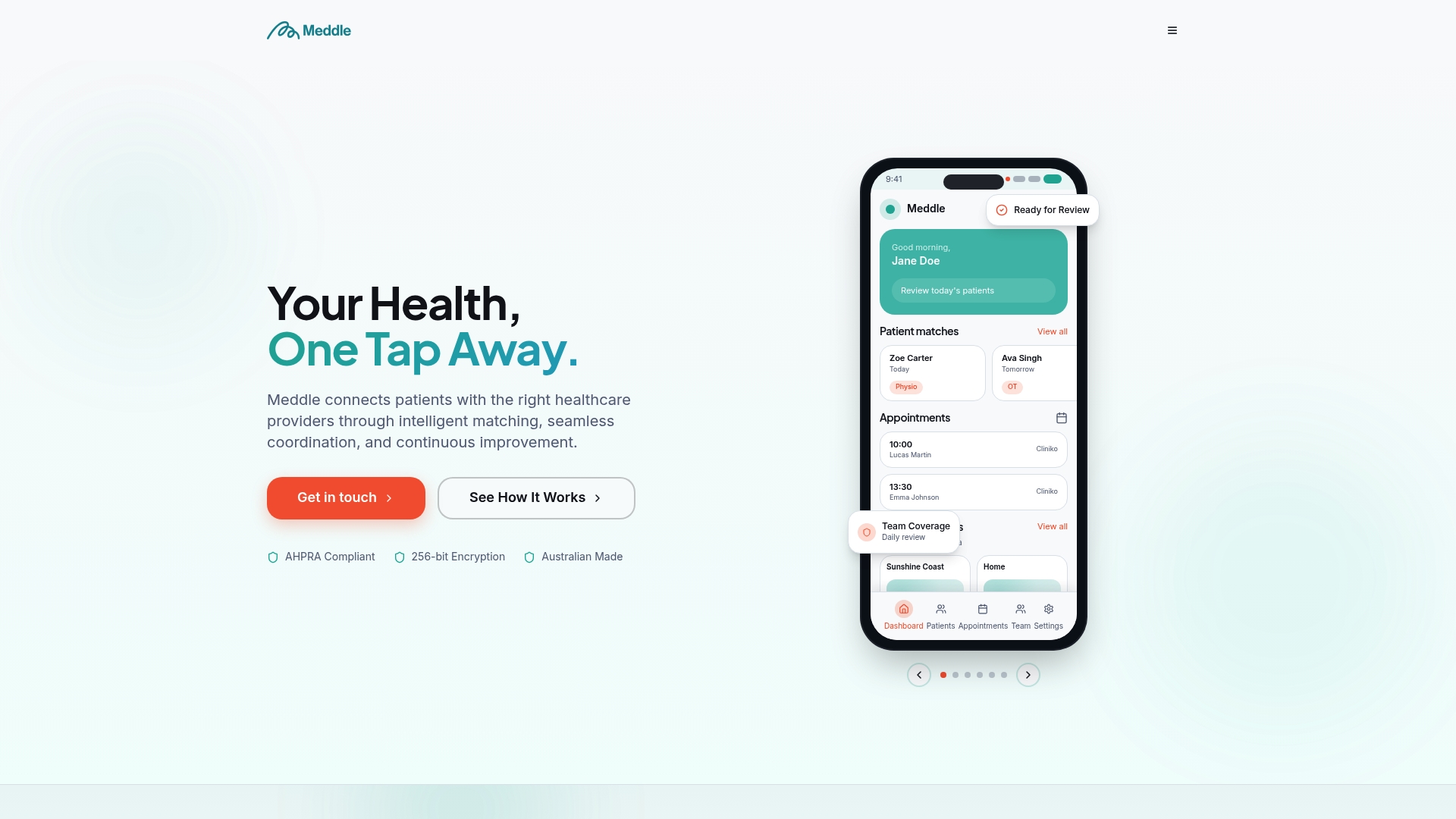
It also matches patients to the right practitioner from the first booking, cutting the mismatched-appointment cancellations that inflate your no-show numbers in the first place. Clinics can check how Meddle’s matching and booking workflow fits their appointment types, and practitioners weighing up whether automation is worth the switch can review the practitioner benefits before committing. Run a one-practitioner pilot for a month, log the before-and-after no-show rate, and decide from real numbers rather than guesswork. Start by exploring Meddle and setting up your first automated reminder sequence.
Sources
For the legal detail behind this article’s wording, go straight to the primary guidance rather than relying on secondhand summaries.
FAQ
What Notice Period Should a Clinic Cancellation Policy Require?
Most clinics use 24 hours for standard appointments and 48 hours for specialist or longer sessions, with a separate same-day or no-show rule sitting on top.
Can Clinics Legally Charge a Cancellation Fee in Australia?
Yes, provided the fee is disclosed before booking and reflects a genuine pre-estimate of likely loss rather than a punitive charge.
How Does NDIS Short-Notice Cancellation Differ From Standard Policy?
NDIS short-notice generally means less than two clear business days, and providers may claim up to 100% of the agreed fee if no alternative billable work is found.
How Do I Cancel a Clinic Appointment Without Incurring a Fee?
Cancel before your clinic’s stated notice window, typically 24 to 48 hours ahead, using the reschedule link in your reminder text or by calling the front desk directly.
What’s the Best Way to Enforce a No-Show Policy Consistently?
Automate reminders with a one-click reschedule option, log every cancellation with a timestamp and reason, and require practice-manager sign-off on any fee waiver so enforcement doesn’t depend on which staff member answers the phone.