Daylight Saving Scheduling for Australian Clinics: 2 AM Risks

Daylight saving in Australia starts on Sunday 4 October 2026 at 2:00am in the Australian Capital Territory, New South Wales, South Australia, Tasmania and Victoria, with clocks moving forward one hour. Queensland, Western Australia and the Northern Territory stay on standard time year round. If you manage bookings across states, check your calendar and booking system time zone settings now, before the switch catches a patient or client off guard.
TL;DR:
The current daylight saving period ends Sunday, April 4, 2027, when clocks move from 3:00am back to 2:00am.
South Australia remains 30 minutes behind the eastern states during daylight saving, while Sydney is one hour ahead of Brisbane.
Booking systems that use fixed offsets can misfire; send invitations in each recipient’s time zone and confirm interstate telehealth appointments before changeover.
For shifts spanning the change, document clock adjustments and check award terms; one example counts seven hours worked as eight paid hours.
Table of Contents
When daylight saving starts and ends in Australia
The rule is consistent across every jurisdiction that observes it: daylight saving time (DST) begins at 2:00am on the first Sunday in October, when clocks jump forward to 3:00am, and ends at 3:00am on the first Sunday in April, when clocks fall back to 2:00am. For the current cycle, that means DST begins on Sunday 4 October 2026 and ends on Sunday 4 April 2027, exactly as confirmed by the Reserve Bank of Australia’s DST schedule.
These dates follow the same pattern, so knowing the rule helps you plan ahead without waiting for a reminder. If you want to confirm details for your own state, each participating government publishes its own page with the same dates and local notes worth bookmarking if you coordinate appointments regularly.
Which states observe daylight saving and which don’t
Five jurisdictions wind their clocks forward each October: the Australian Capital Territory, New South Wales, South Australia, Tasmania and Victoria. Queensland, Western Australia and the Northern Territory do not observe DST at all, staying on standard time through the whole year.
South Australia adds a layer of complexity because it already sits on Central Standard Time, 30 minutes behind the eastern states rather than a full hour. During DST, South Australia shifts to Australian Central Daylight Time, remaining 30 minutes behind the eastern states. For anyone booking a cross-state appointment, that gap is easy to misjudge if you’re used to full-hour time differences, so it’s worth double-checking rather than assuming a round number.
Clock-change mechanics and cross-state time examples
The mechanics are simple once you picture them: at 2:00am Australian Eastern Standard Time on changeover day, clocks spring forward to 3:00am Australian Eastern Daylight Time. In April, the reverse happens at 3:00am AEDT, which becomes 2:00am AEST again. These labels and offsets follow the conventions the Bureau of Meteorology uses in its own observation records, which also notes that DST is sometimes called summer time in older references.
The practical challenge comes when non-DST states stay still while DST states move. Common conversions during the DST period include Sydney being one hour ahead of Brisbane, Melbourne 30 minutes ahead of Adelaide, Perth three hours behind Hobart, and Adelaide two-and-a-half hours ahead of Perth.

Outside the DST window, several of these gaps shrink or disappear entirely, which is exactly why a fixed mental shortcut fails twice a year. Treat each conversion as a fresh check rather than a rule you memorised last season.
Avoiding missed appointments: a practical checklist
A clinic receptionist juggling patients in three states, or a family coordinating a telehealth session with a specialist interstate, faces the same risk: a booking that’s correct in one time zone and wrong in another, so evening urgent care alternatives that emphasize clear scheduling can help manage this complexity. A short routine around the changeover prevents most of these mistakes.
-
Confirm your booking system applies local DST rules automatically rather than a fixed offset.
-
Send calendar invites using each recipient’s own time zone, not the sender’s.
-
Send SMS or email reminders before any appointment that falls near a changeover weekend.
-
Ask for a confirmation reply on cross-state telehealth bookings so both sides agree on the time.
-
Double-check appointments scheduled soon after a clock change, when errors can occur.
Manual time entries and static UTC offsets are the usual culprits behind a missed booking, because they don’t know a changeover happened. Services Australia notes that modern online booking tools increasingly account for local time differences automatically, which is exactly the gap that causes confusion when a system doesn’t.
Clinics that want a simple way to prevent calendar mismatches can also look at calendar sync practices built for Australian privacy rules.
Pro Tip: Ask your clinic to list both the local time and the provider’s time in every appointment confirmation, and pair that with an automated SMS reminder close to the appointment.
Do devices and calendars update automatically?
Most modern smartphones, laptops and cloud calendars update their clocks automatically once they’re set to network time and automatic time zone detection, so the switch happens without you touching a setting. Google Calendar, Outlook and similar tools generally handle the shift correctly for events created with a specific time zone attached.
The exceptions are worth knowing:
-
Manually set clocks on ovens, car dashboards or older alarm systems don’t adjust themselves.
-
Some bespoke or legacy booking systems built on fixed offsets rather than time zone rules can misfire around the changeover.
-
Appliances and devices not connected to the internet rely on whoever resets them by hand.
If you’re not sure your setup is safe, check that automatic time and automatic time zone are both switched on, refresh your calendar sync, and test a dummy booking across a changeover date before it matters.
Employer, shift work and record-keeping implications
Pay during a DST changeover is generally calculated “by the clock” unless an award or registered agreement says otherwise, according to Fair Work Ombudsman guidance, which gives an example where a shift spanning the spring forward involves seven hours worked but eight hours paid by the clock.
For drivers and others required to keep work and rest logs, the National Heavy Vehicle Regulator expects records to reflect actual clock time during DST changes, including when crossing between DST and non-DST jurisdictions. The safest approach for any shift that spans a changeover is a clear note on the timesheet explaining the clock shift, plus a quick check of the relevant award terms before processing pay.
Why this trips up more schedules than you’d expect

In our experience, the confusion around daylight saving rarely comes from not knowing the dates. It comes from the handful of appointments sitting quietly in a calendar that nobody double-checked after the clocks moved. A patient booked for “10am their time” before a changeover can easily end up an hour out if nobody flags the shift.
The fixes that matter most are the simple ones: confirm your booking system actually applies DST rules rather than a fixed offset, use SMS reminders as a backstop, and treat any cross-state telehealth booking as worth a quick confirmation message. Clinics that build this into a routine rather than a once-a-year scramble tend to see fewer last-minute reshuffles and fewer frustrated calls on changeover Monday.
— Taylor
Another option for clinics managing DST scheduling risk
Plenty of clinics handle changeover weekends with a shared spreadsheet and a lot of manual checking, and that works until someone forgets to update a recurring booking. We built our platform so that doesn’t fall on one person’s memory.
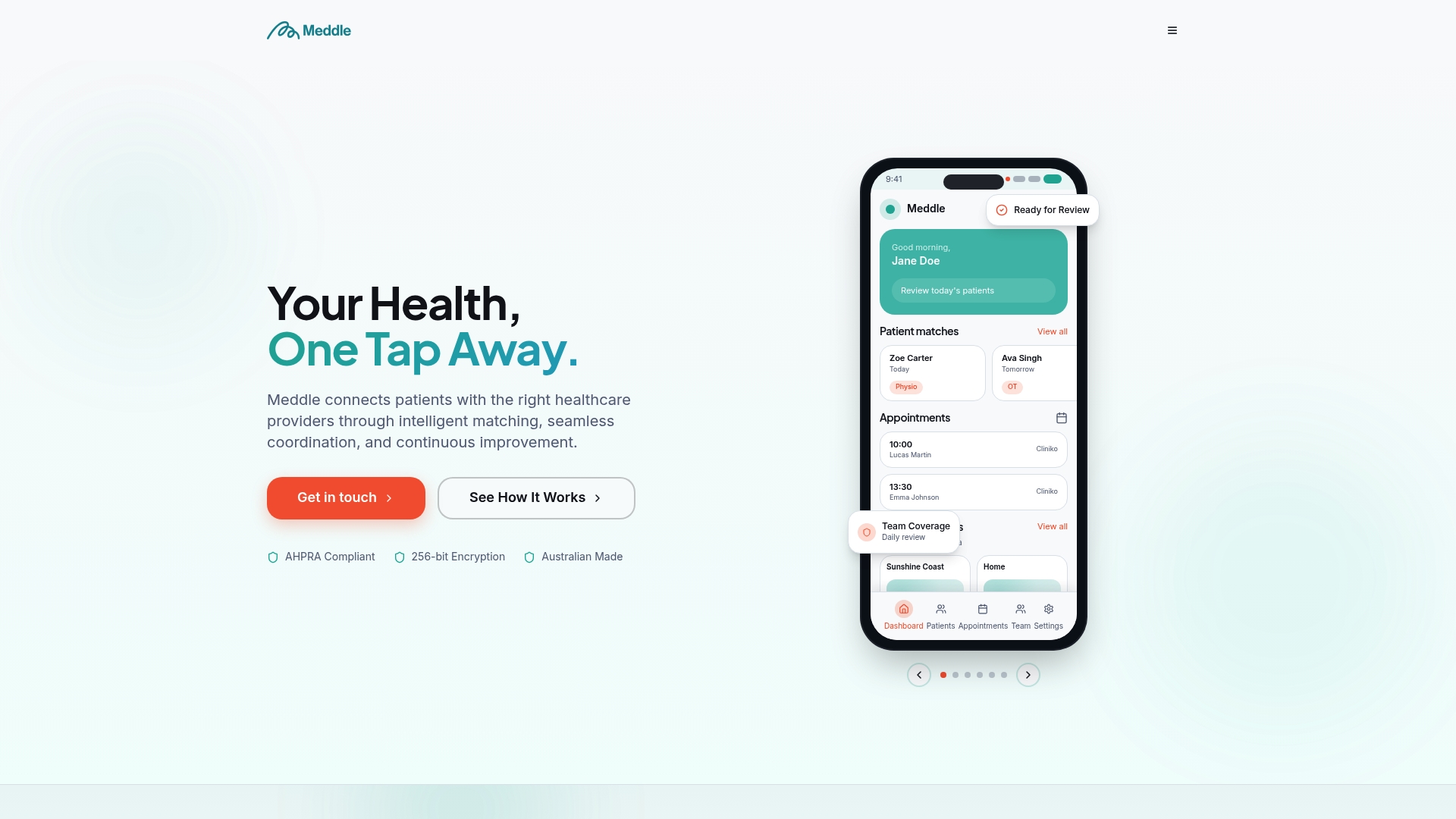
Our matching and referral routing help clinics manage referrals across locations and time zones, with the clinic confirming each booking. Clinics using our platform can also rely on:
-
Matching against the capacity each clinician has shared.
-
SMS notifications sent ahead of appointments to reduce no-shows (included in Simple Rollout).
-
A platform that works alongside your practice software and calendar.
If your clinic wants fewer changeover headaches, have a look at how our platform works or check current plans and pricing to see what fits your practice.
FAQ
What time does daylight saving end in Australia?
Daylight saving ends at 3:00am on the first Sunday in April, when clocks move back to 2:00am. For the current cycle, that date is Sunday 4 April 2027.
Do I lose an hour of sleep on changeover Sunday?
Yes, when clocks spring forward in October you lose an hour, since 2:00am becomes 3:00am instantly. In April, the clocks move back and you gain that hour.
Why is South Australia 30 minutes off the eastern states?
South Australia runs on Central Standard Time, which sits 30 minutes behind the eastern states rather than a full hour. That gap stays consistent whether or not daylight saving is in effect.
Which states don’t observe daylight saving?
Queensland, Western Australia and the Northern Territory stay on standard time all year and don’t change their clocks in October or April.
What’s the current time difference between Sydney and Perth?
During daylight saving, Sydney is three hours ahead of Perth. Once daylight saving ends, that gap narrows to two hours, since Perth doesn’t observe the time change.
Sources
-
Daylight saving in NSW: When it starts and ends in 2026 and 2027 | NSW Government
-
A new way to book appointments has arrived - Services Australia