Reduce patient no-shows in allied health clinics

The most effective way to reduce patient no shows is to combine behaviourally informed SMS reminders with booking workflow fixes and targeted outreach to high risk patients. Start this week with three actions: switch reminder wording to loss framed language, add a 7 day plus 24 to 48 hour reminder cadence, and flag repeat no show patients for a phone call before their next visit. Clinics that pair reminders with workflow changes typically see meaningfully larger drops in missed appointments than reminders alone.
TL;DR:
Behaviorally informed SMS reminders using loss framing and a two-stage cadence significantly reduce no-shows, especially when combined with workflow adjustments.
Implementing online booking, waitlists, and clear rebooking rules can halve no-show rates and recover revenue through more efficient scheduling.
Targeted outreach for high-risk patients and shorter lead times between booking and appointments further lower missed visits.
Larger clinics benefit from self-scheduling and segmentation, while small practices see early gains from wording and timing changes without new software.
Regularly tracking no-show and fill rates allows clinics to optimize interventions and measure improvements accurately.
Table of Contents
Quick summary: proven tactics at a glance
Before you rebuild your entire booking process, run through this checklist. Most of these changes cost little and can be tested within a fortnight.
-
Switch to behaviourally informed SMS wording: use loss framed language (“you will lose your booking”), rather than neutral confirmations, suited to clinics of any size.
-
Set a two stage reminder cadence: send one message 7 days out and a second 24 to 48 hours before, works for solo practitioners and large multi site clinics alike.
-
Offer self-scheduling online: let patients pick and change their own slots, most useful for larger clinics with higher call volumes.
-
Shorten lead times where possible: offer same week appointments to reduce the gap between booking and attendance.
-
Flag high risk patients in your practice management system: new patients, prior no shows and long lead bookings need extra contact.
-
Add a waitlist with auto fill rules: recover cancelled slots quickly, particularly valuable for busy clinics with tight margins.
-
Introduce a clear, fair no show policy: state consequences without sounding punitive, and build in exceptions for vulnerable patients.
-
Train reception staff on confirmation scripts: a short, warm phone call can catch problems a text message misses.
-
Offer a telehealth appointment where suitable: useful when transport or mobility is the barrier rather than motivation.
-
Track no show rate and fill rate monthly: small clinics can do this in a spreadsheet, larger ones benefit from a simple dashboard.
Solo and small practices tend to get the biggest early wins from reminder wording and cadence changes, since these need no new software. Larger clinics with more administrative capacity get more from self-scheduling, waitlists and segmentation, because they have the volume to justify the setup work.
Designing reminder systems that work
Reminders remain the single highest leverage, lowest cost intervention available to most clinics, but the wording and timing matter as much as sending them at all. A meta-analysis of SMS reminder trials found a pooled odds ratio of 1.62 for improved attendance across randomised controlled trials, meaning patients who received SMS reminders were consistently more likely to show up than those who did not.
Content matters more than most clinics assume. A NSW behavioural insights trial found that behaviourally informed reminders reduced missed hospital outpatient appointments by about one third compared with standard messages. The wording used loss framing: reminding patients what they stand to lose by missing the appointment, rather than simply confirming the time and date. Personalised commitment language, naming the clinician and stating that time has been set aside specifically for the patient, adds a sense of reciprocity that plain reminders lack.
A practical cadence looks like this:
-
Day minus 7: a confirmation message with loss framed wording and an easy reschedule link.
-
Day minus 1 to 2: a shorter, more direct reminder repeating the time and location.
-
High risk patients only: a phone call in addition to SMS, especially for first visits or patients with a prior no show.
SMS should be your primary channel. It is cheap, fast, and does not rely on the patient checking email. Email works as a supplement for appointment details or forms, and phone calls are best reserved for patients flagged as higher risk, since they cost staff time. Our guide on SMS appointment reminders covers message templates suited to Australian clinics in more detail.
To set this up in your practice management system, confirm it supports automated SMS triggers tied to appointment time, then draft two or three message variants and run a simple A/B test: split new bookings evenly across variants for four to six weeks and compare no show rates between groups before rolling out the winner clinic wide.
Behaviourally informed reminders can cut missed appointments by over a third. A NSW trial recorded a 33.7% reduction in missed hospital appointments after switching to loss framed SMS wording, showing that message content is not a minor detail but a major lever.
Booking systems and workflows that reduce no-shows
Reminders fix forgetfulness. Booking workflow changes fix friction, and friction is often the bigger problem. When patients can see the open times in your calendar and book or change a slot themselves, the lead time between booking and appointment shrinks, and shorter lead times are consistently linked to lower no show rates because there is less time for circumstances to change.

A 2025 implementation study in a public pain unit demonstrates what a structured booking system can do. After introducing a new booking system with a defined grace period and clear rebooking rules, the unit’s no show rate was reduced substantially, more than halving from a notable baseline, and billable clinical time increased significantly per session. That is a direct link between a workflow change and recovered revenue, not just a softer metric like patient satisfaction.
To build something similar in your own clinic:
-
Map your current booking path from first contact to appointment day, noting every step that requires a phone call or manual entry.
-
Introduce self-scheduling for at least routine or follow up appointments, showing patients the times your clinic has opened for online booking.
-
Set a grace period policy, for example a 10 to 15 minute window before a slot is released, so late arrivals are not automatically treated as no shows.
-
Add a waitlist with auto fill rules so a cancellation triggers an offer to the next eligible patient rather than sitting empty.
-
Pilot the changes in one team or site for six to eight weeks, tracking no show rate, fill rate, and billable time before expanding further.
Our guide to instant appointment booking walks through the operational steps for setting up online booking and rescheduling workflows in more depth.
Segmenting patients and targeted outreach
Sending every patient the same reminder at the same time undersells your effort, because no show risk is not evenly spread. New patients, those with a prior no show, patients booked far in advance, and younger age groups tend to miss appointments more often, and a single generic SMS rarely closes that gap on its own.
-
New patients: unfamiliar with the clinic and more likely to deprioritise the visit, so a welcome call alongside SMS can help.
-
Prior no show patients: flag them in your practice management system for an extra reminder or a direct phone call before their next booking.
-
Long lead time bookings: add a mid point check in message between the booking date and the appointment.
-
Patients facing transport or access barriers: offer telehealth or help coordinating transport where relevant.
Targeted interventions cost more per patient, so reserve dedicated recall staff and phone calls for the cohorts most likely to miss their visit, and let automated SMS carry the rest of your patient list. Flagging is usually a simple field or tag in your booking system, checked weekly by whoever manages recalls.
Pro Tip: Start with universal SMS reminders for everyone, then layer phone calls and manual outreach only onto the patients your data shows are actually high risk.
Scheduling tactics that lower no-shows
Shorter lead times between booking and appointment are consistently associated with better attendance, because there is less time for a patient’s circumstances or motivation to change. Offering same week slots where clinically appropriate, rather than pushing patients weeks out, is one of the simplest scheduling levers available.
-
Reserve a handful of short, easily rescheduleable slots each day for urgent or high risk bookings.
-
Stagger appointment lengths across the day rather than clustering long sessions late in the afternoon, when fatigue and fail to attend rates both tend to climb.
-
Offer a telehealth appointment where suitable when a patient’s barrier is transport, mobility or time rather than motivation, a point echoed by Building Block Resolutions’ overview of telehealth as a complementary access option.
-
Run a four week pilot on one day of the week, comparing no show rates for shorter lead time bookings against your standard scheduling.
Patient communication and relationship-building
Reminders and scheduling fixes only go so far without genuine communication. Messages and scripts that signal a clinician has set aside time specifically for a patient create a sense of reciprocity that plain confirmations do not, an effect noted in a Victorian Government behavioural insights case study on specialist clinic attendance.
-
Train reception staff to confirm, not just book: a short call that repeats the appointment purpose builds commitment.
-
Give clinicians a simple script for first visits: setting expectations early reduces anxiety driven cancellations.
-
Explain what happens at the appointment: patients who understand the visit’s purpose are less likely to deprioritise it.
-
Use incentives and prepayment cautiously: they can lift attendance but may also deter lower income patients, so weigh the trade-off carefully.
No-show policies, fees and rescheduling rules
A clear policy protects clinic capacity without alienating patients, provided the language focuses on access rather than punishment.
-
State the policy plainly at booking: explain the grace period and what happens if a patient misses without notice.
-
Build in documented exceptions: illness, carer responsibilities and transport failures should have a recorded, consistent process rather than ad hoc leniency.
-
Rebook immediately: offer a new slot within the same conversation rather than leaving the patient to call back.
-
Check local requirements: confirm any cancellation fee or policy wording complies with relevant health and consumer regulations before rolling it out.
Pro Tip: Frame your policy around “helping us see more patients who need care” rather than “penalising missed visits,” it reads as fairer and gets less pushback.
Measure, monitor and optimise
You cannot improve what you do not track. Three core metrics matter most: no show rate (missed appointments divided by total scheduled), cancellation timing (how far in advance patients cancel), and fill rate (how many cancelled slots get rebooked).
-
Build a simple monthly dashboard, even a spreadsheet, tracking these three numbers by clinician or team.
-
Run small A/B tests on message wording and timing, comparing groups over four to six weeks before committing to a change clinic wide.
-
Compare pre and post intervention periods to estimate recovered billable time and cost savings.
-
Scale an intervention once it shows a consistent improvement across at least one full reporting cycle, not after a single good week.
Behaviourally informed reminders and booking fixes have delivered some of the largest documented reductions in missed appointments. The NSW behavioural insights trial recorded a 33.7% drop in missed appointments, while a pain unit booking system implementation cut its no show rate from 27.12% to 11.93%, giving clinics two concrete benchmarks to aim for.
Putting the evidence into practice: a rollout checklist
Modern booking and matching platforms can operationalise most of what the evidence points to, rather than leaving it to manual reminders and spreadsheets. Automated SMS notifications, online booking and rescheduling, and waitlists directly address the timing, content and lead time factors covered above, and pairing them with accurate practitioner matching reduces the mismatch related cancellations that generic directories cannot solve.
A practical rollout sequence looks like this:
-
Pilot in one team or site first, tracking no show rate and fill rate for six to eight weeks.
-
Set up automated SMS with loss framed wording and the 7 day plus 24 to 48 hour cadence.
-
Train reception and clinical staff on confirmation scripts and rescheduling workflows before go live.
-
Run a privacy review of any patient data used for segmentation or flagging, particularly for high risk cohorts.
-
Review results monthly and expand to additional teams once the pilot shows a consistent improvement.
Pragmatic trade-offs and decision guide
Small clinics with limited admin time should prioritise reminder wording and cadence first, since it needs no new infrastructure and delivers a fast, visible result. Medium and larger clinics get more from adding self-scheduling and waitlists once reminders are stable. The most common pitfall is skipping the testing step, rolling out a new policy or message template clinic wide without comparing it against the old one first, which makes it impossible to know what actually worked. Test in small batches, measure honestly, and keep the changes that earn their place.
— Taylor
How Meddle supports clinics working to reduce no-shows
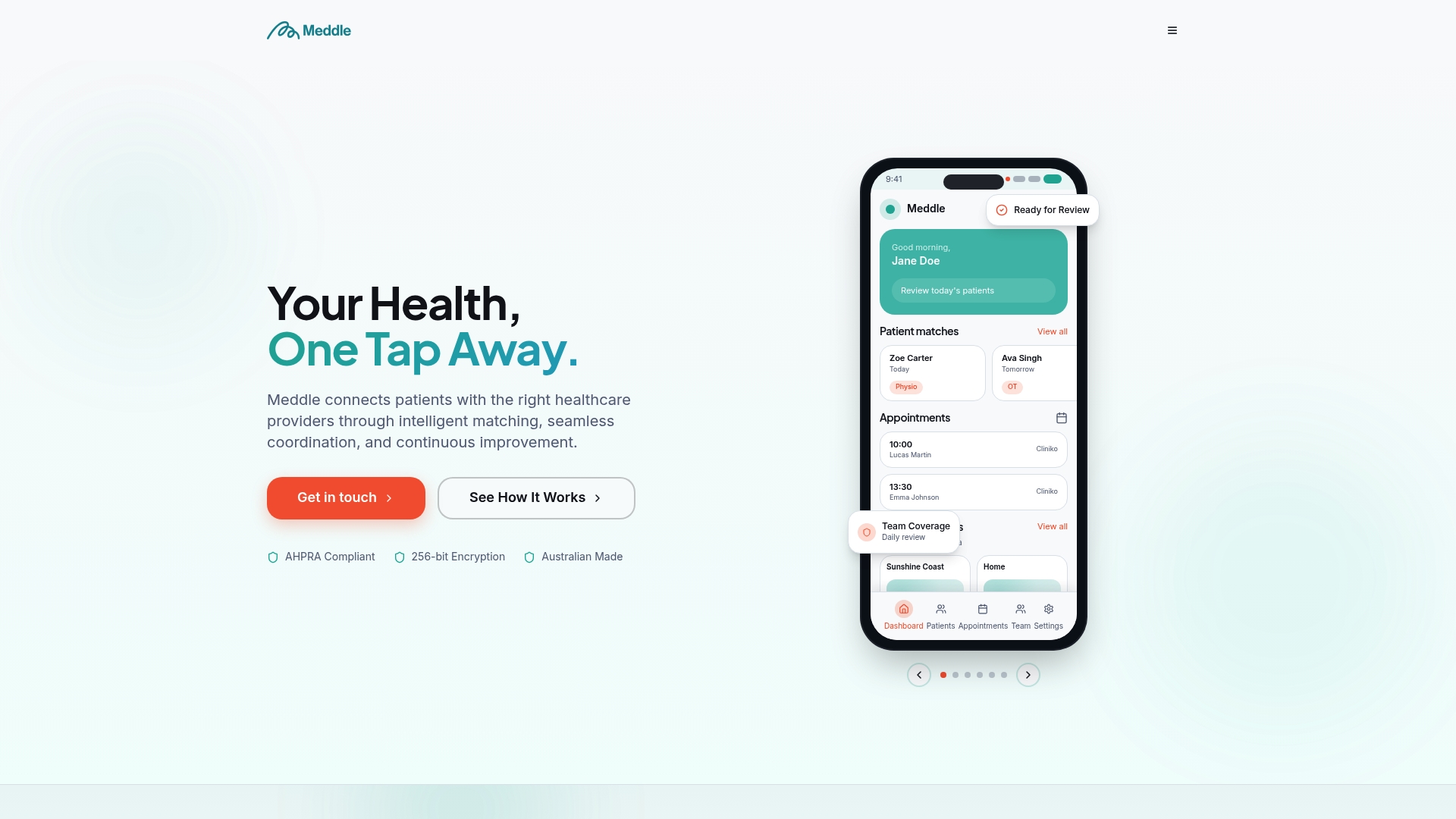
Meddle pairs the reminder and workflow fixes covered above with algorithmic patient matching: it matches by discipline, location and the capacity each clinician has shared, then routes the referral, and the clinic confirms the booking. Getting patients to the right practitioner the first time reduces the mismatch related cancellations that generic booking pages cannot prevent. SMS notifications and reminders are included in Simple Rollout, from $40 per practitioner per month (ex GST, $250 monthly minimum).
-
SMS notifications and reminders: included in Simple Rollout, alongside email appointment notifications.
-
Referral routing: referrals go to a clinician who has shared capacity, and the clinic confirms the time, cutting admin calls.
-
Practitioner matching: reduces mismatched bookings that often turn into cancellations or no shows.
If you manage an allied health clinic and want to see how this fits your workflow, check Meddle’s pricing and plans or browse how patients experience booking through Find Care.
Key evidence and practical resources
This playbook draws on NSW behavioural insights trials, a 2025 booking system implementation study, and a systematic review of SMS reminder trials, alongside Meddle’s guides on SMS reminders and instant booking.
Sources
-
Using behaviourally-informed reminders cuts missed hospital appointments | NSW Government
-
Systematic review of SMS reminders and appointment attendance (QUT repository)
FAQ
How to reduce patient no-shows?
Combine behaviourally informed SMS reminders, sent 7 days and again 24 to 48 hours before an appointment, with booking workflow fixes like self-scheduling and waitlists. A NSW trial found loss framed reminders cut missed appointments by 33.7%, and pairing reminders with scheduling changes tends to outperform either approach alone.
How do you say “no show” professionally?
Clinics commonly use terms like “missed appointment,” “failed to attend,” or “non-attendance” in patient facing communication and policies. These phrases describe the same event as “no show” but read as neutral rather than accusatory, which supports a fairer tone in policy wording.
How to decrease no show rate?
Shorten the lead time between booking and appointment, add a grace period and clear rebooking rules, and flag high risk patients such as new patients or those with a prior no show for extra outreach. A 2025 booking system implementation reduced no shows from 27.12% to 11.93% using exactly this combination.
What happens when a patient’s no show occurs?
A missed appointment typically means the clinic loses that billable slot unless a waitlist or auto fill rule immediately offers it to another patient. Clear rescheduling workflows and a documented no show policy help clinics recover that capacity quickly and decide fairly on any exceptions for vulnerable patients.