How to Fill Last-Minute Cancellations in Allied Health

To fill a last-minute cancellation, you need three things ready before the cancellation happens: a short-notice list of patients who have agreed to be contacted, a fast and orderly way to offer the slot, and a cancellation policy that patients have seen in writing. Clinics that rely on a reception team ringing around on the day lose time and slots. Clinics with a prepared process turn most gaps into bookings, or at least into a clean record of why a gap stayed empty.
This guide is written for clinic owners and practice managers in Australia. It covers the process step by step, the consent and NDIS rules that apply, and the policy settings that reduce the number of gaps in the first place.
TL;DR
- Build a short-notice list at booking: record availability, appointment type, practitioner and length, and ask for consent to be contacted.
- Offer a freed slot to one patient, or a small batch, at a time, and check the slot is still free before you confirm.
- Get SMS consent and offer a simple opt-out. Keep messages to the minimum needed for scheduling.
- NDIS providers can claim short-notice cancellation fees only where the terms are documented in a service agreement.
- A written policy, a 48-hour reminder and easy self-service rescheduling cut the gaps you have to fill.
Table of Contents
- Why the first hour after a cancellation matters
- A step-by-step process for filling a cancelled slot
- Building a short-notice list that actually works
- SMS, consent and privacy: what you must get right
- NDIS participants: fees, notice and service agreements
- Cancellation policies that reduce the gaps you have to fill
- Our perspective: look for the person, not the gap
- Where Meddle fits
- FAQ
- Sources
Why the first hour after a cancellation matters
A cancelled appointment is not just lost revenue for that session. The practitioner is still rostered, the room is still booked and the admin cost of the original booking is already spent. The closer the cancellation is to the start time, the fewer people can realistically attend, so speed and targeting matter more than volume.
Most clinics fill gaps in one of three ways:
- Ringing or texting whoever comes to mind. Fast to start, but it depends on one person’s memory and often reaches patients who cannot attend.
- Working through a paper or spreadsheet waitlist. Better, but the list goes stale, and nobody knows who has agreed to short-notice contact.
- Using a structured short-notice list with automated offers. The system finds suitable patients, offers the slot in order and stops when someone accepts.
The third approach is the one worth aiming for, even if you start with the second and tidy it up as you go.
A step-by-step process for filling a cancelled slot
Write this down and give it to every person on reception. A shared sequence matters more than any individual tool.
- Record the gap precisely. Note the practitioner, appointment type, length, time and whether the slot can be shortened or combined with a neighbouring gap.
- Offer the slot to the patient who cancelled, once. If the reason is a clash rather than a decision to stop care, a same-week rebooking keeps the care plan on track and is easier than finding a new patient.
- Filter your short-notice list. Match on appointment type, practitioner, duration and the days and times the patient said they could attend. Urgency from the care plan comes next: someone mid-rehabilitation should rank above someone who simply wants an earlier time.
- Contact one patient, or a small batch, at a time. Offering the same slot to ten people at once guarantees awkward conversations. Thoughtly’s scheduling guidance describes an orderly one-by-one or small-group approach for this reason.
- Check availability again before you confirm. A slot can be taken by a phone booking while an SMS is in flight. A fresh check before a firm offer prevents double-booking. Our guide to preventing double bookings with holds, sync and locks goes through the options.
- Close the loop. Confirm the winning patient, tell everyone else the slot has gone, and say you will be in touch if another opens.
- Log the outcome. Record whether the slot was filled, how long it took and who filled it. After a month you will see which days and practitioners generate gaps.
What to say when you offer the slot
Keep the message short and specific: practitioner first name, day, time, location or telehealth, and a single clear way to accept, such as replying with one word or tapping a link. Do not include clinical details. A message like “A 45-minute physio appointment has opened tomorrow at 2:15 pm. Reply YES to take it” tells the patient everything needed and nothing more.
Decide in advance what happens to late replies. A good default is a polite message that the slot has been taken and that the patient stays on the list.
Building a short-notice list that actually works
The list is the asset. Filling gaps quickly is mostly a question of how good the list was before the gap appeared.
What to capture at booking
For each patient who opts in, record:
- Consent to be contacted about short-notice openings, and by which channel
- Availability: days, times and how much notice they need
- Appointment type and length they require
- Preferred practitioner, or whether any suitable practitioner is fine
- Urgency, based on the care plan or clinical need
- Travel limits, if they are attending in person
The point of the last four is that only suitable patients are offered a slot. Offering a 60-minute initial assessment to someone waiting for a 30-minute review wastes both parties’ time. Waitlist guidance consistently stresses tracking urgency, availability and the required visit type for this reason, as Recupra’s waitlist guide sets out.
If you have more people waiting than slots, you need a rule for who goes first. We cover that in detail in waitlist prioritisation in allied health. The short version: decide the order in writing, apply it every time, and be able to explain it to a patient who asks.
Keep the list clean
An out-of-date list is worse than none, because staff stop trusting it. Once a month, remove patients who have been booked, discharged or who no longer want contact, and ask long-standing entries whether their availability has changed. Pre-appointment forms are a natural place to collect this information, and our guide to pre-appointment questionnaires and privacy shows how to ask without over-collecting.
Include new referrals, not just existing patients
Your list should not be limited to people already in your books. Referrals sitting in an inbox, web enquiries that were never booked and GP referrals waiting on a first appointment are all potential fills for a cancelled slot, particularly for initial assessments. This is where intake discipline pays off: if every referral is captured as structured information (specialty, location, appointment type, urgency), it can be matched to an opening in minutes rather than found by someone scrolling through emails.
SMS, consent and privacy: what you must get right
SMS is the fastest channel for short-notice offers, and the one where clinics most often cut corners.
Consent comes first. Commercial electronic messages, which can include SMS, must be sent with the recipient’s consent, a point the OAIC has made in an enforceable undertaking. The cleanest approach is to ask at booking, record the answer and keep it with the patient’s record. Our checklist of five SMS consent checks walks through what to record.
Make opting out easy. Every message needs a simple way to stop. See what clinics must do about SMS opt-outs for the practical detail.
Say as little as possible. Scheduling messages should carry the minimum information needed: time, practitioner and clinic. Do not name a condition, a service that reveals one, or a diagnosis. For anything beyond logistics, use a secure channel; the six-step secure patient messaging checklist covers what to look for.
Do not offer a slot to one patient by disclosing who cancelled. Never tell a patient that another named person cancelled. “A slot has opened” is enough.
If your tools store contact details and waitlist data, review how that data is protected as well. Our 12-step guide to securing patient records under APP 11 is a good audit starting point.

NDIS participants: fees, notice and service agreements
If part of your caseload is NDIS-funded, a late cancellation has a different financial consequence, and your ability to fill the slot affects what you can claim.
Under the NDIS Pricing Arrangements and Price Limits 2025-26, providers may claim up to 100% of the agreed fee for a short-notice cancellation. Short notice is defined as less than two clear business days for supports not delivered by a disability support worker, and less than seven days for disability support worker supports. The same document states that the terms must be documented in a service agreement, and that the provider must have been unable to find alternative billable work for the worker.
That last condition is the one many clinics overlook. Filling the slot is not just good for revenue; a documented attempt to redeploy the practitioner is part of what supports a claim when you cannot. Keep a simple record of the gap, the offers you made and the result. Price limits are updated regularly, so check the current NDIS pricing arrangements before you finalise your agreements.
Participant information also needs careful handling. The NDIS Code of Conduct expects providers to manage participant information under privacy laws, so participants know what is collected, why, who can see it and how to access or correct it. A short-notice list is participant information. Tell people it exists.

Cancellation policies that reduce the gaps you have to fill
Filling gaps is the second-best outcome. The best is fewer gaps. Australian clinics publish policies you can learn from:
| Clinic | Notice and fee approach |
|---|---|
| TSH | SMS and email reminders 48 hours ahead; 50% fee inside 48 hours, 100% inside 24 hours, subject to the policy’s conditions; the Practice Manager may waive fees in exceptional circumstances |
| PhysioWard Sports & Rehab | At least 24 hours’ notice requested; cancellations within 24 hours may incur 50% of the consult fee, with exceptions for emergency or illness |
| The Benevolent Society | No charge with at least two business days’ notice; late cancellation or non-attendance may attract 100% of the scheduled fee; management can review where charging is inappropriate |
Three patterns stand out. Each policy states a clear notice window. Each has a path for exceptional circumstances. And TSH links its policy to a reminder schedule, so the patient has a prompt before the fee window begins.
Tell patients before treatment starts
A policy only works if patients have seen it. Miranda Day Surgery tells patients about its policy when they book, repeats it in confirmation emails, sends SMS reminders and asks patients to acknowledge the terms digitally. You can copy that layered approach: booking conversation, confirmation, reminder, acknowledgement.
For wording and templates, see our clinic cancellation policy guide with 48-hour, 24-hour and same-day templates.
Make rescheduling easier than cancelling
Many late cancellations happen because the patient did not know how to move the appointment, or did not want to phone. Put a reschedule link in every confirmation and reminder. A patient who moves from Thursday to Monday is a gap you never have to fill. Reminder timing and wording are covered in SMS appointment reminders for Australian practices, and reducing patient no-shows covers the wider set of fixes.
Keep some flexibility
Flat enforcement damages relationships. Ensora Health’s guidance for therapy cancellation policies suggests keeping room for emergencies and illness, so the therapeutic relationship is not harmed. Decide who can waive a fee, and record the reason when they do.
Our perspective: look for the person, not the gap
Most advice on last-minute cancellations treats an empty slot as a scheduling problem. We think it is a matching problem. A gap at 2:15 pm on Thursday is only useful to a patient who needs that practitioner, that appointment type and that location, and who has said they are happy to hear from you.
That is why we built Meddle around structured intake. Referrals arrive from GPs, email and web forms in different shapes. When they are turned into structured records, covering specialty, travel radius and appointment type, a clinic is not starting from scratch when a slot opens. It already knows who is waiting and who fits. Directories list who is out there. Our focus is connecting the person to the right care and carrying their story forward, so reception does not have to ask the same questions twice.
The practical advice we give clinic owners:
- Fix intake first. A clean list makes every later step faster.
- Offer slots in a defined order, and make the order explainable.
- Treat consent as part of the booking, not an afterthought.
- Review gaps monthly. Patterns tell you more than any single cancellation.
Our patient data is hosted in Sydney, and we design the messaging and intake flow so that scheduling messages carry only what they need to.
— Taylor
Where Meddle fits
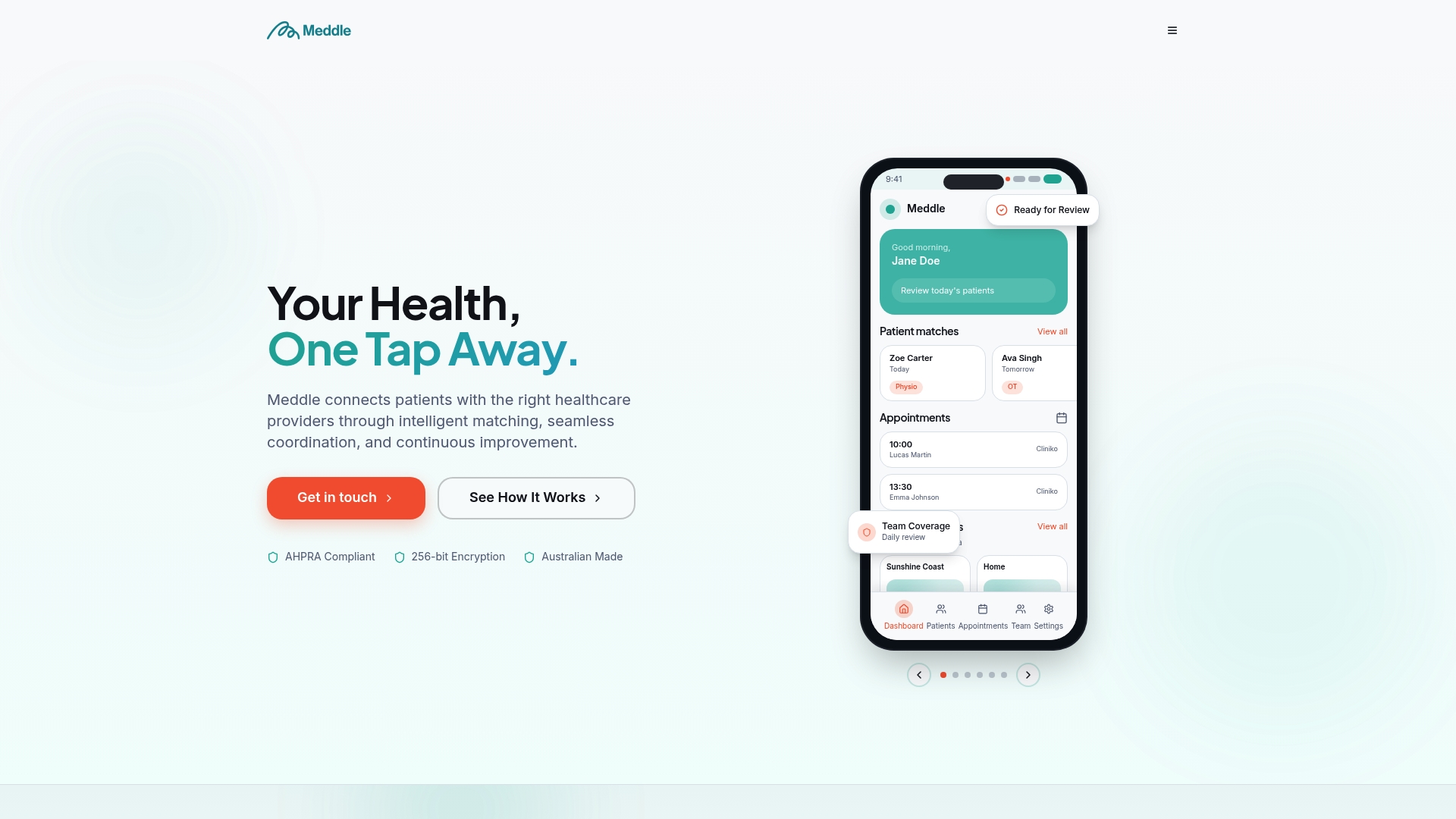
Meddle turns referrals from GPs, email and web forms into structured intake, triage and practitioner matching, so your team can see who suits an opening instead of searching for them. Clinics use it to lose fewer leads and spend less time on admin.
Pricing is AA$40 per practitioner per month ex GST, with a A$250 minimum, and there is a free 30-day pilot so you can test it on your own cancellations before committing. You can see how the patient side works on our find care page, or see how referrers send work to clinics on the referrer page.
FAQ
How do you respond to a last-minute cancellation?
Acknowledge it politely, confirm whether a fee applies under your written policy, and offer a new time straight away. Then start your short-notice process for the freed slot. If the reason is genuine illness or an emergency, your policy should say who can waive the fee.
Should I charge for last-minute cancellations?
Most allied-health clinics do, provided the policy is written and patients have seen it before treatment. Published Australian policies commonly charge 50% inside a 24 to 48 hour window and up to 100% closer to the time or for no-shows, with exceptions for emergencies. NDIS fees must follow the NDIS price limits and your service agreement.
Can I text patients to offer a cancelled appointment?
Yes, if they have consented to receive those messages and you give them a simple way to opt out. Ask at booking, record the answer and keep the message to scheduling details only. Never include clinical information in the text.
How many patients should I contact at once?
One at a time, or a small batch, is the safest approach. It avoids offering the same slot to many people and having to turn most of them away. Check the slot is still free before confirming whoever replies first.
What if nobody on the list can take the slot?
Record the outcome, then use the time for non-clinical work or shorten the session if the practitioner’s schedule allows. For NDIS participants, keep your record of the attempts to find alternative work, since that supports a short-notice claim. Review monthly whether your list needs more patients.
If you want to see how structured intake and matching would work on your clinic’s cancellations, book a 30-minute demo.
Sources
- Clinic Cancellation Policy, TSH
- Cancellation Policy, PhysioWard Sports & Rehab
- Cancelling Appointments guideline, The Benevolent Society
- Cancellation Policy, Miranda Day Surgery
- NDIS Pricing Arrangements and Price Limits 2025-26
- The NDIS Code of Conduct
- OAIC enforceable undertaking: Organica and Brygon
- Medical Office Scheduling for Canceled Slots, Thoughtly
- How to Automate Waitlist Management in a Clinic, Recupra
- Creating a cancellation policy for PT, OT and SLP, Ensora Health
Recommended
- Cut Cancellations 8–16%: Appointment Lead Time for Clinic Managers
- Waitlist Prioritisation in Allied Health: A Clinic Guide
- AI Telehealth Scheduling for Allied Health Clinics 2026
- Clinic Cancellation Policy: 48/24/Same Day Templates & Metrics
This article is general information for healthcare businesses and isn’t legal, clinical or privacy advice. Check current requirements with the relevant regulator or a qualified adviser.