
A safe overbooking strategy books extra patients only into the slots most likely to go empty, caps how many extras any practitioner carries in a day, and is built on your own no-show data rather than a flat rule. Done that way, it recovers lost capacity without long waits or overtime. Done as blanket double-booking, it trades empty chairs for stressed staff. Most of the gain comes from fixing the causes of missed appointments first, then overbooking only the gap that remains. We built Triage & Practitioner Matching around that principle: fewer leads lost, less admin per booking.
TL;DR
- Overbooking means scheduling more appointments than slots, expecting some patients not to attend. It improves access and productivity but increases waiting times and overtime.
- Reduce no-shows first. One Australian allied-health pain unit cut no-shows from 27.12% to 11.93% with a booking-system change.
- Overbook selectively, by practitioner and appointment type, with a hard daily cap.
- Write down what happens when everyone turns up, so reception is never improvising.
- Review monthly and adjust. The right level is the one your data supports.
Table of Contents
- What an overbooking strategy is and why clinics use it
- What the Australian data says about no-shows
- Step 1: Reduce avoidable no-shows before you overbook
- Step 2: Set a limit from your own data
- Step 3: Overbook selectively
- Step 4: Plan for the day everyone turns up
- The risks and how to contain them
- Protecting access for patients who need it most
- How to trial it over 90 days
- Meddle’s perspective
- Fill the diary from the front door
- FAQ
- Sources
What an overbooking strategy is and why clinics use it
An overbooking strategy is a deliberate rule for booking more patients than you have slots, because a predictable share will cancel or not arrive. Each empty slot is lost income and lost access for someone on your waitlist. Research by LaGanga and Lawrence found that no-shows reduce provider productivity, raise costs and limit effective capacity. Overbooking helps most when a clinic sees many patients, no-show rates are higher and session length is predictable.
That last point matters for allied health. A 30-minute podiatry review is predictable. A first psychology assessment or an NDIS functional capacity session is not, so the same rule should not apply to both.
What the Australian data says about no-shows
You need to know your own rate before choosing a limit, but local studies show what the range looks like and what drives it.
- A regional NSW general practice super clinic recorded a 7.6% missed-appointment rate across 90,785 appointments. Mondays (8.1%), Fridays (8.0%) and Thursdays (7.9%) were highest, and patients with five or fewer scheduled appointments carried a 19.1% greater risk of missing one.
- At an Australian university dental clinic, 68% of appointments were attended, 23% cancelled and 9% were no-shows. Patients aged 16 to 24 were five times more likely to miss an appointment.
- A Queensland Health analysis of almost 2.9 million specialist outpatient appointments found non-attendance of 9.1% for telehealth against 7.9% in person. It concluded the most common reasons are forgetting or confusion about appointment details.
Three lessons follow. No-show risk is uneven across days, ages and booking history. A lot of it is forgetfulness, which reminders can address. And your clinic’s rate will differ from all of these, so measure it.
Step 1: Reduce avoidable no-shows before you overbook
Overbooking is a patch over the gap. Shrink the gap first, and you need less of it.

The Central Coast Local Health District pain unit in NSW introduced a new allied-health booking system with a grace period for patients to reschedule. No-shows fell from 27.12% to 11.93%, billable clinical time rose from 39.3 to 52.4 minutes, and administrative contacts per booking dropped from 1.4 to 1.15. Vulnerable patients were reappointed rather than dropped.
Practical moves:
- Send reminders with full details. Include date, time, practitioner, location and an easy way to cancel or reschedule. In the Queensland study, timely reminders and easy rescheduling were the most effective countermeasures. Our Diary, Booking & SMS product covers the booking and reminder side in one place.
- Shorten the lead time. Appointments booked more than 60 days out had a 7.7% no-show rate in a US rural health system study. See our guide on appointment lead time.
- Write a clear policy. Patients behave better when the rules on cancellation notice are stated up front. Our clinic booking policy guide shows what to include.
- Follow the existing playbook for missed appointments. Our article on reducing patient no-shows covers SMS and booking fixes in more detail.
Step 2: Set a limit from your own data
Pull three to six months of schedule data from your practice system. For each practitioner and appointment type, work out:
- attendance, late cancellation and no-show rates
- which days and times lose the most appointments
- the lead time between booking and appointment
- how many sessions ran over time when everyone attended
Then set a cap. A published example is a useful reference point, not a target. A US rural health system model scored upcoming appointments for no-show risk and recommended one overbook for every six at-risk appointments per provider per day, capped at two. The authors set the cap with subject experts for practical reasons, not only from the model.
Two ideas from that example travel well. Tie the overbook to risk, not to the calendar. And keep a hard daily ceiling that protects the practitioner.
Worked example
A physiotherapist has 12 follow-up slots on a Monday. Your data shows 3 of the 12 booked patients usually have a risk marker, such as booked more than eight weeks ahead or a history of missed visits. Using the one-in-six idea, that is not enough at-risk appointments to justify an overbook. If 6 of the 12 were at risk, you would add one extra booking, and never more than two. Adjust after a month of results.

Step 3: Overbook selectively
Blanket overbooking is where clinics get into trouble. Neurology practice guidance from the American Academy of Neurology suggests developing the process with the provider and overbooking only certain appointment types so the rest of the schedule is not disrupted.
A workable split for a multidisciplinary clinic:
| Appointment type | Overbooking approach |
|---|---|
| Standard follow-ups (physio, podiatry, dietetics) | Eligible, within a daily cap |
| Group sessions and classes | Eligible, based on typical attendance |
| Initial assessments | Usually no overbooking, as length varies |
| Complex or NDIS plan reviews | No overbooking |
| Patients with a history of vulnerability or complex needs | Protect the slot, reappoint rather than penalise |
Research from Purdue University finds overbooking usually raises expected clinic profit but always increases patient no-show rates, and suggests a controlled appointment queue and selective, dynamic overbooking. That supports keeping the rule narrow.
For multi-practitioner clinics, load matters too. If one practitioner absorbs every overbook, burnout follows. Read our guides on multi-practitioner scheduling and load balancing appointments.
Step 4: Plan for the day everyone turns up
The most common failure is no plan for full attendance. Guidance from the AAN is to create a process for when double-booked patients arrive. Agree it in advance:
- Who decides. One named person, usually the practice manager or senior coordinator, owns the call.
- Who goes first. Patients with the earliest booking and clinical urgency are seen on time.
- What reception says. A short, honest script about the delay and the choice to wait or rebook.
- Where the extra patient goes. Another practitioner with a gap, a short cancellation slot, or a priority rebooking within days.
- What you record. Log each overbook and each full-attendance event so you can review the cap.
Matching helps here. When a clinic can see which practitioners cover the same specialty and appointment type, an overflow patient can move to an available colleague instead of waiting. That is what our triage and practitioner matching is designed for, using specialty, travel radius and appointment type.
The risks and how to contain them
Overbooking improves access but increases patient waiting and provider overtime. A student health clinic at East Carolina University found that no-shows cost it an estimated over US$400,000 a year in lost access. Staff accepted overbooking once the model included the nonlinear cost of burnout from running past capacity. The lesson: count the cost to your team, not just the revenue.
Controls to build in:
- A daily cap per practitioner, reviewed monthly.
- Targeting by predicted risk. A study by Hanauer and Huang found that a predictive approach reduced patient waiting by at least 6%, provider overtime by 27% and total costs by 3% compared with flat overbooking.
- Practitioner input on which appointments they will accept.
- A start with a small trial. Researchers advise that a clinic with no overbooking history should begin from historical no-show and cancellation estimates and adjust dynamically, noting that past an optimal level, more overbooking becomes counterproductive.
Protecting access for patients who need it most
No-show risk is not evenly spread, and the patients with the highest risk are often those with the greatest need. The regional NSW study found Aboriginal adults had much higher odds of non-attendance, which points to access barriers rather than unreliability. A rule that penalises those patients widens the gap. The pain-unit approach of grace periods and reappointing vulnerable patients shows a fairer path.
A related idea from booking-horizon research: patients scheduled within shorter horizons are less likely to no-show or cancel, so clinics can keep a call list or offer short-notice slots for patients who would otherwise wait far ahead. Pairing that with overbooking protects access and fills gaps.
How to trial it over 90 days
- Weeks 1 to 2: Collect baseline data and agree the rules with practitioners.
- Weeks 3 to 6: Start with one or two practitioners and one appointment type. Cap at one overbook per day.
- Weeks 7 to 10: Review wait times, overtime, full-attendance events and practitioner feedback weekly.
- Weeks 11 to 13: Decide whether to widen, hold or stop. Document the final policy.
Slot design affects every step. Our guides on appointment slot optimisation and reducing clinic wait times show how to keep the day flowing.
Meddle’s perspective
We think overbooking should be the last lever, not the first. Most clinics lose capacity earlier: a referral that never becomes a booking, a patient matched to the wrong practitioner, an intake form that stalls.
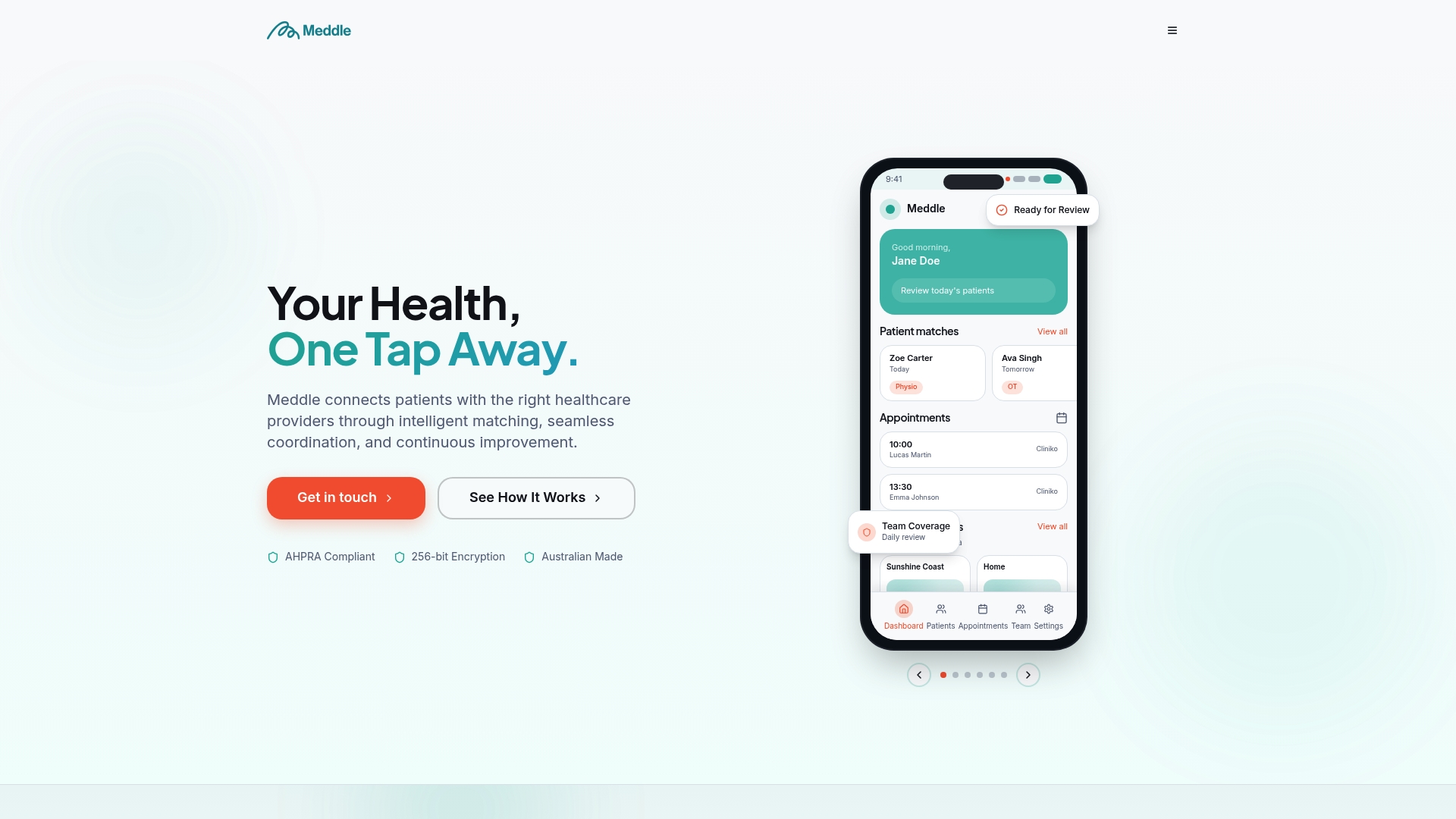
That is why we focus on the front of the process. Meddle turns referrals from GPs, email and web forms into structured intake, triage and practitioner matching, so the right patient lands with the right practitioner and the diary fills for the right reasons.
When the schedule is built on a good match, the cap you set for overbooking can stay low, and your team’s day stays manageable.
Taylor
Fill the diary from the front door
Meddle is priced at A$40 per user per month ex GST, or A$400 per user per year ex GST (two months free). Every user pays the same, including admins and coordinators, and everything is included with no add-ons. You can start with a free 30-day pilot. Patient data is hosted in Sydney. See the full product overview for how a referral becomes a booked appointment.
FAQ
What is an overbooking strategy?
It is a rule for booking more appointments than you have slots, expecting some patients to cancel or not attend. The aim is to protect practitioner time and patient access. It works best with a cap, applied to selected appointment types.
Is 20 patients a day too much?
It depends on appointment length, practitioner and complexity, not the number alone. Twenty 20-minute reviews are a different day from twenty 45-minute assessments. Look at overtime and wait times in your own data, and ask the practitioner what is sustainable.
How do you solve overbooking?
If you mean a day where too many patients arrived, use your agreed process: a named decision-maker, a seen-first rule and a rebooking or overflow option. To prevent it, lower the cap, target only high-risk slots and cut no-shows with reminders and shorter lead times.
What causes overbooking?
It is driven by patient non-attendance. Missed appointments are linked to the day of week, patient history and age, and forgetfulness or confusion about details. Clinics then book extra patients to compensate.
Ready to see it in your clinic? Book a 30-minute demo.
Sources
- Clinic Overbooking to Improve Patient Access and Increase Provider Productivity
- Factors associated with non-attendance in a general practice super clinic
- Patient non-attendance and use of a reminder system, dental clinic
- Non-attendance in telehealth, Queensland Health
- Development of an evidence-based model for predicting no-shows (BMC Health Services Research)
- Improving access to care (AAN)
- Primary-Care Clinic Overbooking and Its Impact on Patient Access (Purdue)
- Overbooking Increases Patient Access at East Carolina University
- Patient No-Show Predictive Model Development (Hanauer and Huang)
- Robust Overbooking for No-Shows and Cancellations (MDPI Mathematics)
- Optimising the booking horizon in healthcare
Recommended
- Appointment Slot Optimisation for Allied-Health Clinics
- Multi-Practitioner Scheduling for Allied Health Clinics
- Waitlist Prioritisation in Allied Health: A Clinic Guide
- How to Fill Last-Minute Cancellations in Allied Health
This article is general information for healthcare businesses and isn’t legal, clinical or privacy advice. Check current requirements with the relevant regulator or a qualified adviser.